Can Lateral Move Irrigation travel on moist land?
Lateral move irrigation can travel on moist land — but performance depends heavily on equipment design. A lateral move irrigation system moves in a straight line across rectangular fields, achieving field utilization above 98%. On wet or saturated soils, wheel size, drive configuration, and frame weight distribution all affect traction and soil compaction risk. With proper tire selection (such as 14.9-24 or 16.9-24 low-pressure options), four-wheel drive carts, and guidance systems like BDS/GPS satellite navigation, these linear irrigation machines can maintain reliable movement even on damp terrain.
Understanding Lateral Move Irrigation and Its Mobility Capabilities


How a Linear Move System Works
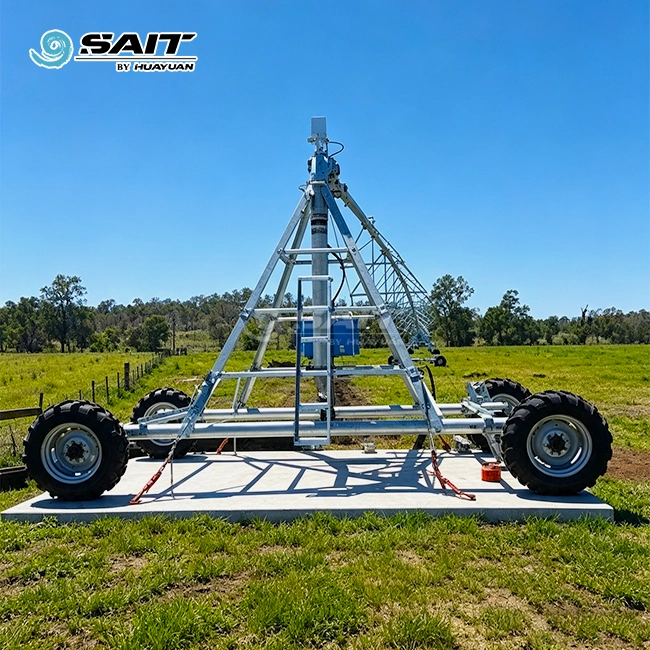
A center pivot turns around a fixed point, but a lateral move system moves along the full length of the field without touching its frame. The lateral move models from HUAYUAN SAIT can handle machine lengths of up to 973 meters, span lengths of 37.5 meters to 54.9 meters, and trip distances of up to 3,000 meters, which means that each unit can cover up to 240 hectares. The system moves in both directions and comes back after each pass to make sure that rectangular or narrow fields get the same amount of water.
Drive Unit Configurations
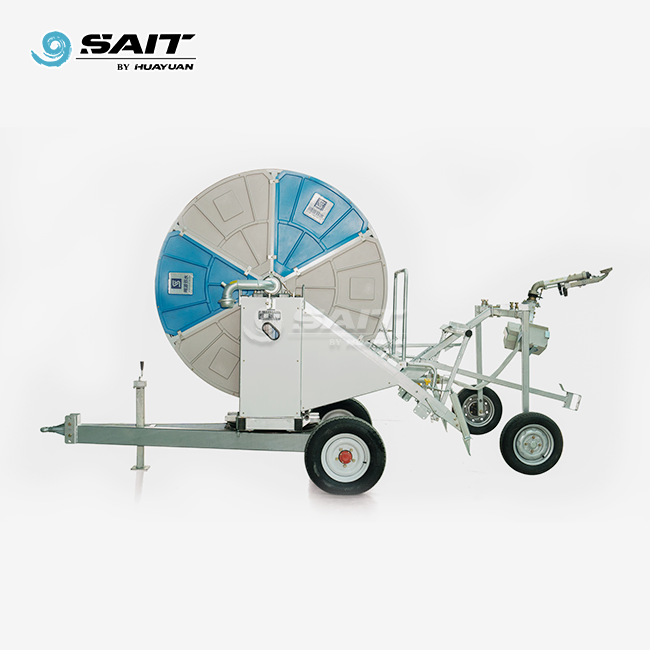
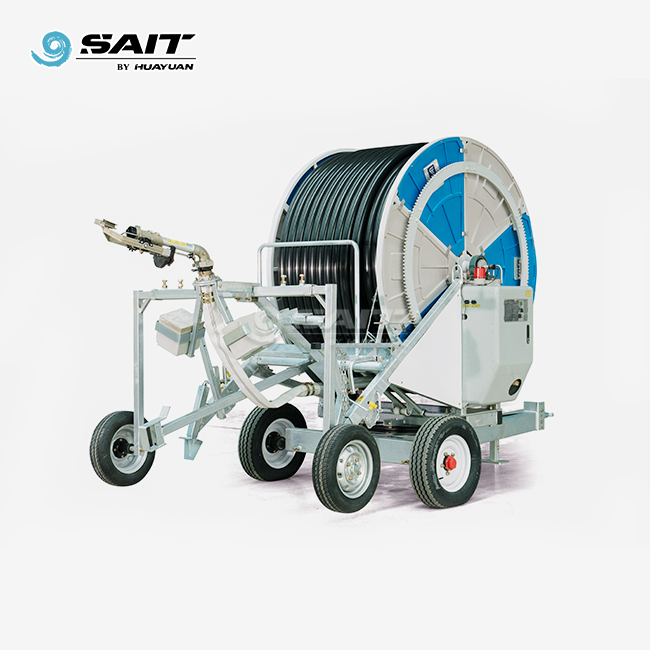
You can choose from three different types of drives: two-wheel linear irrigation, four-wheel lateral irrigation, and swing-around linear irrigation. The version with four wheels is designed to handle rough terrain. Its dual-axle grip and bigger wheelbase lower ground pressure, which is very important when the soil is wet. This setup keeps the machine from sinking and slipping on soft ground, which is what happens with lighter two-wheel units.
Guidance Systems and Their Role on Wet Ground
For lateral move irrigation, accurate guidance is more important when the ground is wet because the machine has to stay on track even when the wheels don't always touch the ground. There are three guidance options available for HUAYUAN SAIT's lateral move irrigation systems: Furrow Guidance, Cable Guidance, and BDS/GPS Dual-Mode Satellite Guidance. In wet areas where furrow lines may soften or shift, satellite guidance maintains tracking accuracy within one meter regardless of ground surface conditions.
Analyzing the Challenges of Operating Lateral Move Irrigation on Moist Land
Traction Loss and Soil Compaction
When the ground is wet, the tire doesn't stick as much to it. If the drive cart wheels don't have enough grip, they will spin in place, creating ruts and areas of heavy packing. Repeated passes over wet areas speed up damage to the structure of the soil profile, which stops crops like potatoes and sugar beets from growing roots. Choosing the right tire size is an important part of the design process and can't be skipped.
Wheel and Tire Selection for Wet Conditions
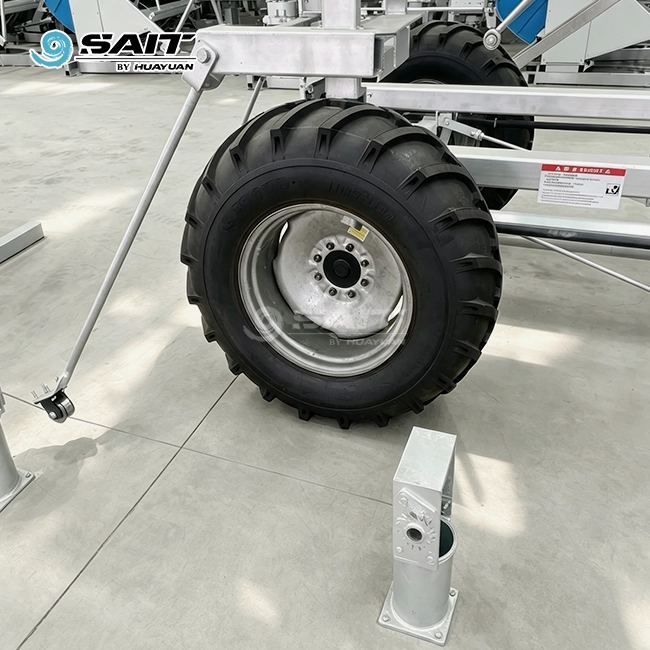
HUAYUAN SAIT's lateral move systems can work with three tire sizes: 11.2-24, 14.9-24, and 16.9-24. These sizes can be bought with or without tubes. The weight of the machine is spread out over a larger area, which lowers the ground pressure per square inch. When the ground is clay-rich or wet, the 16.9-24 tubeless option is usually the best choice because it has the lowest contact pressure and keeps the structure stable over long distances.
Maintenance Practices in Wet Environments
When equipment is used on wet land, it needs to be maintained in a certain way to make it last longer. Here are the main things that should be done when working in a wet environment:
- Inspect drive cart bearings after each wet-season cycle. Water and mud ingress into bearing housings accelerates wear, particularly on the drive shaft seals of four-wheel units operating in clay soils.
- Check and re-tension guidance cables or clean satellite antenna mounts. Mud accumulation on cable sensors or GPS antenna brackets can cause guidance drift, particularly after heavy irrigation passes on saturated ground.
- Flush the main pipe system and inspect joints. HUAYUAN SAIT uses self-produced virgin PE pipes — thicker than industry standard and fracture-resistant — which significantly reduce joint failure risk in wet-cycle use.
When done regularly, these repair steps make equipment last longer and cut down on unplanned breaks during peak crop irrigation times. Every system from HUAYUAN SAIT comes with a full guarantee for one year, low-cost part replacement for three years, and extra parts at the factory cost price for life.
Comparing Lateral Move Irrigation with Other Irrigation Systems on Moist Terrain
Center Pivot vs. Lateral Move on Wet Soil
Center pivot systems turn around an anchor point that stays in place. When the fields are wet, the outer spans move faster and cover more ground with each rotation. This puts more stress on the outer drive units, which raises the risk of compaction in areas around the edges that are already saturated. Lateral move systems, on the other hand, use the same amount of drive force on all lengths at the same time, which spreads the load out more fairly. Because of this, linear move systems work best in fields that are rectangular and tend to get wet.
Drip Irrigation vs. Lateral Move for Wet Land
Drip systems send water straight to the roots without having to move the water around the field. Drip keeps the ground from getting compacted on flooded or wet plots. But drip systems stay in one place, need a lot of piping in the field, and can't be moved from leased land to a neighboring community plot. For contract farming businesses or groups that take care of several rectangular plots, a movable lateral move unit gives them more operating freedom than drip systems can offer.
Cost and Coverage Efficiency
Lateral move irrigation covers more than 98% of rectangular fields with a length-to-width ratio of more than 2:1. This is much more than what center pivots do, which is usually only 78–80% for square fields. On large rectangular plots, the higher yield-per-acre results and less waste on the field edges make up for the higher cost per hectare of linear systems over pivots. When the ground is wet, buying a four-wheel drive setup adds about 10–15% to the unit cost but cuts down on the time it takes to recover from rain events by a large amount.
Procurement Guidance: Selecting and Installing Lateral Move Systems for Moist Land
Matching System Specifications to Field Conditions
When buying things for wet land, you should start by looking at the land's shape and how much weight it can hold. The engineering team at HUAYUAN SAIT suggests the best drive unit for each site based on the type of soil, the slope of the field, and the crop height clearance needs. For crops like corn or sugarcane where the height of the canopy makes it hard for standard spans to move, there are high-clearance spans that can be used.
Water Supply and Power Configuration
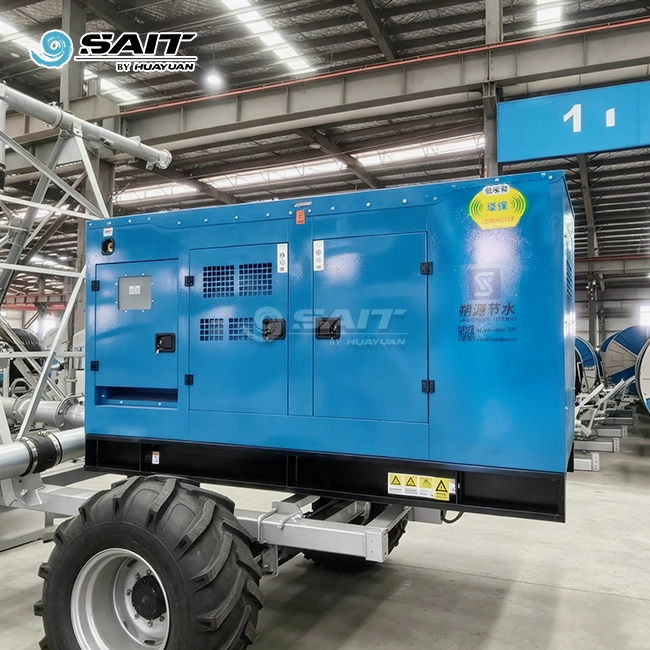
Fields with limited infrastructure need to be able to change how they get water. The HUAYUAN SAIT can work in both Canal Water Supply and Drag Hose Water Supply modes, and it has a number of power options, such as a Generator and a Towed Cable. For projects in dry, remote areas like the CIS or Sub-Saharan Africa, the generator-powered setup with a drag hose for water supply works best because it doesn't need to be connected to a fixed utility line.
Installation and After-Sales Support
HUAYUAN SAIT supervises the installation on-site and trains operators in the buyer's language. The company has stable shipping processes because it has been making things for 20 years and can make 1,800 units a year. The Huaihai Economic Zone is close to Xuzhou and makes it easy for foreign shipping orders to reach. Distributors who need private-label configurations can get OEM and ODM customization.
Case Studies and Best Practices: Successful Use on Moist Land
Sugar Beet and Potato Operations in Heavy-Soil Regions
During the growing season, the earth stays very wet in big, rectangular sugar beet and potato areas that are popular in Kazakhstan and the Midwest of the United States. When equipped with satellite navigation, four-wheel lateral move units with 16.9-24 tires have shown they can reliably drive on clay loam soils with moisture levels above field capacity while keeping guiding accuracy within acceptable deviation limits.
Vegetable Row Crops Requiring Precision Application
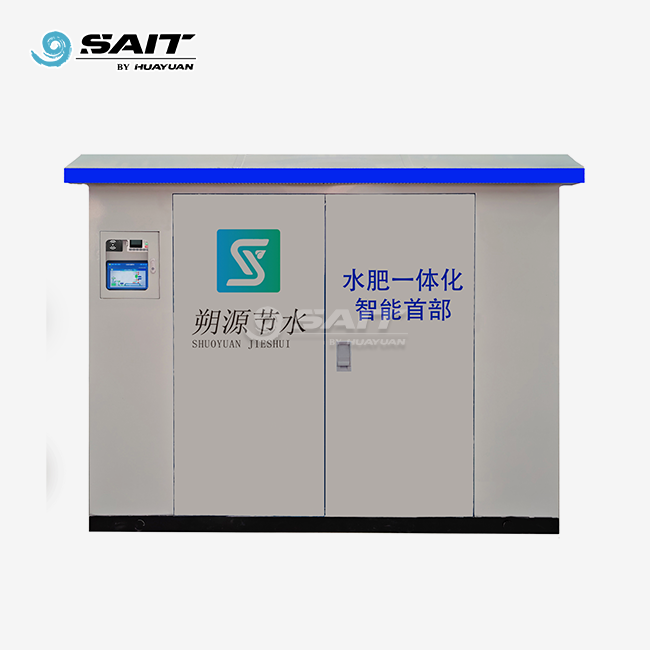
High-clearance horizontal move lengths let the machine go over crop rows without touching the leaves of leafy greens or carrots grown on wet, raised-bed fields by vegetable growers. When you use fertigation integration, liquid nutrients can be added during each irrigation pass. This means that tractors don't have to go over wet fields as much, and the work is done by fewer people, which saves money.
Seasonal Adaptation Strategies
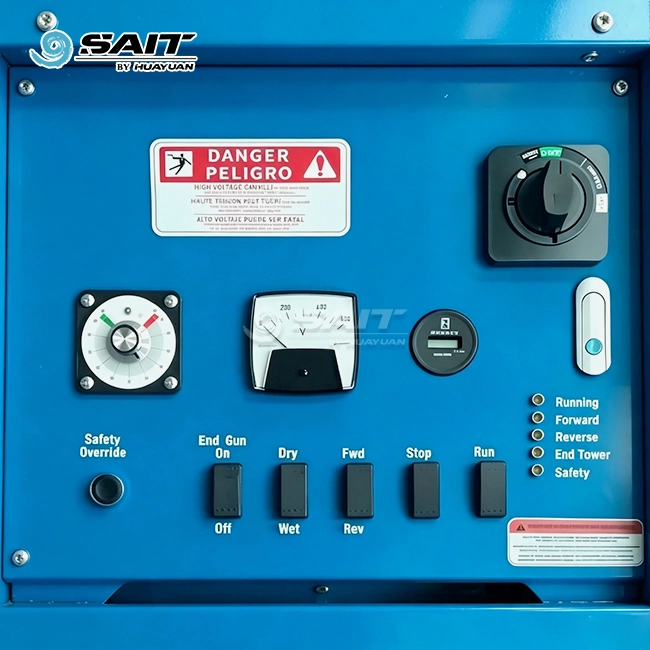
When operating teams are in areas with a lot of moisture, they change their travel plans to avoid peak saturation windows, which usually happen 24 to 48 hours after heavy rain. HUAYUAN SAIT units can come with remote-controlled electronic systems that let operators stop and start the machine's movement from a distance. This keeps it from going over flooded areas more than it needs to without having to inspect the area on foot.
Conclusion
Lateral move irrigation can travel on moist land when the right equipment configuration is selected. Tire size, drive unit type, guidance method, and soil preparation all directly determine performance outcomes on wet terrain. HUAYUAN SAIT's four-wheel lateral move systems, built with hot-dip galvanized steel over 80μm, virgin PE pipes, and BDS/GPS dual-mode satellite guidance, are engineered to perform reliably across diverse soil moisture conditions. With 130+ patents and deep agricultural engineering expertise, these systems deliver 98%+ field coverage on rectangular plots while minimizing compaction on sensitive soils.
FAQ
Q1: How often should a lateral move irrigation system travel on wet soil to avoid compaction damage?
Readings of the soil's wetness should be used to change how often travel is done. As a general rule, don't move machines when the volumetric wetness of the earth is more than 35% in clay-based soils. The usual procedure for most row crop activities is to wait 24 to 48 hours after heavy rain.
Q2: What maintenance does a lateral move system need after repeated use on moist ground?
Some important maintenance jobs are checking the bearings on the drive carts, cleaning the guidance sensors or GPS radio mounts, looking for stress cracks in all the pipe joints, and re-greasing the wheel hub assemblies.
Q3: Which lateral move system configuration works best for clay or waterlogged soils?
For heavy or wet soils, the Four-Wheel Lateral Irrigation configuration with 16.9-24 tubeless tires is the best choice. When combined with BDS/GPS satellite guidance, it keeps travel stable without relying on the integrity of the furrow, which usually breaks down when it rains.
Q4: Can lateral move systems be used with fertigation on wet fields?
Yes. In all of their setups, HUAYUAN SAIT's devices can integrate fertigation. Applying nutrients through the irrigation pass on wet fields cuts down on the need for separate equipment for applying fertilizer, which would add machine runs that would compact an already wet field surface.
Get Your Custom Lateral Move Irrigation Quote from HUAYUAN SAIT
HUAYUAN SAIT creates and sells lateral move irrigation systems that are made to work in real fields that are wet, heavy, and have uneven ground. We have been making straight lateral move irrigation systems for 20 years and offer OEM/ODM services, flexible power and water supply setups, and help with on-site installation. Contact our team right away to get advice on what tools will work best at your place. You can email us at kevin@showyirrigation.com.
References
1. Food and Agriculture Organization of the United Nations (FAO). Irrigation Water Management: Irrigation Methods. FAO Irrigation and Drainage Paper No. 45, 1988.
2. Howell, T.A. "Irrigation Efficiency." Encyclopedia of Water Science, Marcel Dekker, 2003.
3. Camp, C.R., Sadler, E.J., & Yoder, R.E. (Eds.). Evapotranspiration and Irrigation Scheduling. American Society of Agricultural Engineers, 1996.
4. Irrigation Association. Landscape Irrigation Scheduling and Water Management. Irrigation Association Technical Publication, 2014.
5. Shock, C.C., & Welch, T. "Deficit Irrigation of Potato." Oregon State University Extension Service, EM 8782-E, 2013.
6. Payero, J.O., Tarkalson, D.D., Irmak, S., Davison, D., & Petersen, J.L. "Effect of Irrigation Amounts Applied with Subsurface Drip Irrigation on Corn Evapotranspiration, Growth, Biomass, Grain Yield, and Water Use Efficiency." Agricultural Water Management, Elsevier, 2008.
Get a tailored irrigation solution for your project — our engineering team is ready to support you from design to installation.