How to Choose a Center Pivot End Gun System for Your Farm
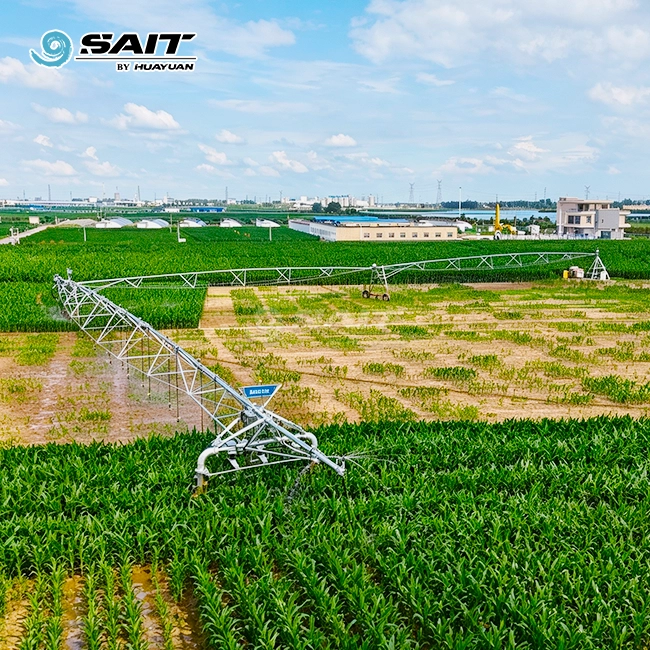
Choosing the right center pivot end gun system directly determines how much of your field actually receives water. This high-pressure sprinkler assembly mounts at the outermost end of a pivot pipeline and throws water beyond the machine's physical reach—recovering corner acreage that would otherwise go dry. The correct selection depends on field geometry, operating pressure, crop clearance requirements, and long-term maintenance capacity. This guide walks you through every critical decision point, from baseline hydraulics to procurement logistics, so you can invest with confidence.
Understanding Center Pivot End Gun Systems: Basics and Benefits
A pivot-end gun is more than just a big nozzle attached to the end span. The booster pump, solenoid sector valve, drive arm, and trajectory nozzle are all part of an engineered assembly that has been calibrated to deliver a certain flow volume at a certain throw radius. Pressures used are usually between 40 and 100 PSI, and the orifice sizes of the nozzles run from 0.4 to 1.5 inches. In different regions, wind resistance and pattern consistency are based on trajectory angles of 18°, 24°, or 43°.


Why Boundary Coverage Matters to Your Bottom Line
A study from the American Society of Agricultural and Biological Engineers confirms that a standard pivot's circular sweep misses about 21% of a square field when it comes to watering. With the right-sized end gun, you can recover up to 15% of that border land, which means you can plant more rows of corn, soybeans, or cotton without increasing the number of pivot spans.
Distribution Uniformity (DU) and Coefficient of Uniformity (CU) are the two measurements used by ASAE S398.1 to describe how well an end gun works. In this field, the standard is a CU above 85% at the overlap zone between the last normal spray and the end gun. When systems fall below this level, wet/dry bands happen, which make the yield less consistent.
Core Criteria for Choosing the Right End Gun System
When looking for the best pivot end gun for your needs, you need to think about four useful factors: the shape of the field, the gun's hydraulic capacity, how well it fits with the structure, and how fast water can penetrate the soil.
Here are the main things that should be taken into account in every buying decision:
- Field shape and size: High-throw end guns with GPS-linked sector control work best on square or rectangular fields bigger than 200 hectares. When the edges aren't straight, you need programmable arc stops that can be moved between 90° and 180° to keep the application from going off target near roads or drainage channels.
- Available pressure at the distal end: If the pipeline pressure at the last tower goes below 40 PSI, a separate booster pump with a power rating of 2–5 HP must be used. The most common reason why end guns don't rotate in the field is that this step is skipped.
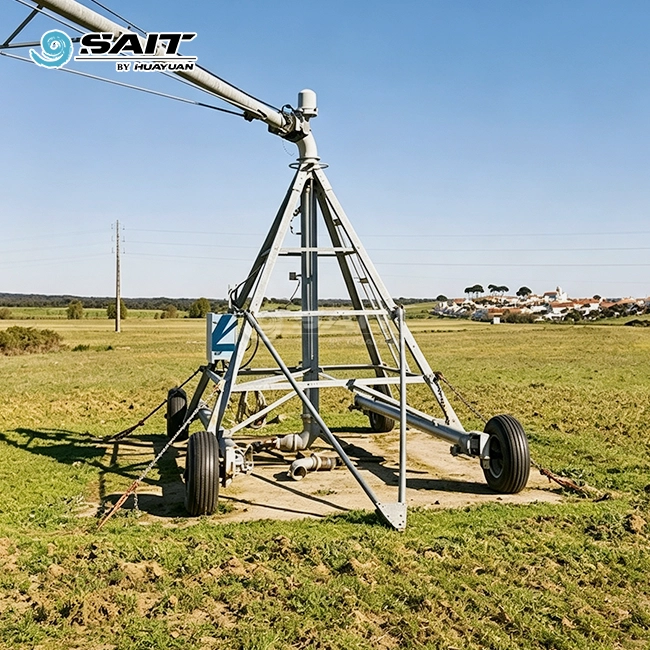
- Structural clearance and span height: Crops like corn and sugar cane need pivot profile heights of 3.8m or 4.5m to clear the canopy. The span heights in HUAYUAN SAIT's range are 2.1m, 2.9m, 3.8m, and 4.5m, so they can fit a wide range of crops, from low-growing wheat to tall biofuel crops.
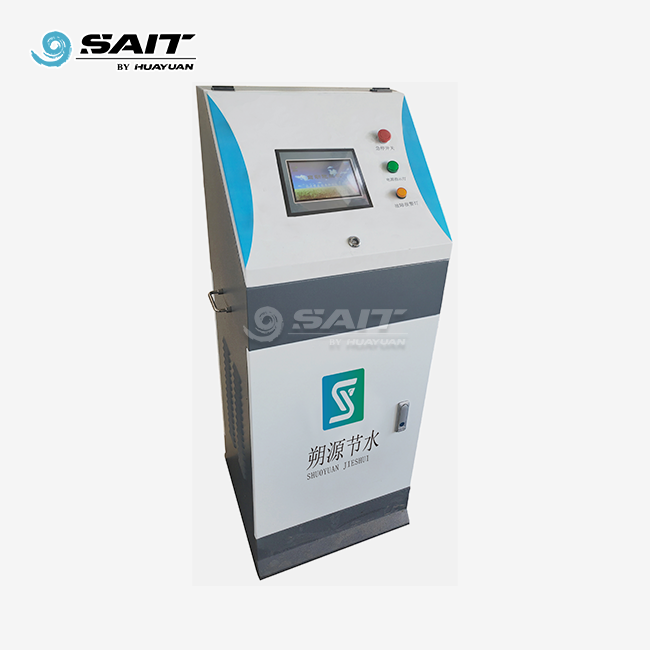
- Soil infiltration rate alignment: The SAIT Smart Control System adjusts the rate of application based on data about how much water percolates into the soil. This stops surface runoff in clay-rich soils and keeps the level of moisture penetration the same across sandy loam profiles.
A structured screening grid is made up of these factors. When buyers skip one dimension, they often find operational mismatches, like guns that stop rotating because they don't have enough pressure or assemblies that are too big and waterlog the field margins. If you meet all four conditions at the beginning, you won't have to make the most expensive changes after the installation.
Comparing Pivot End Gun Options in the Market
In 2024, the automated irrigation market will be split into three main technology groups: end-gun systems with a hydraulic drive, guns driven by an electric solenoid, and smart valve assemblies with GPS triggering that are built into the guns. By knowing where each tier does best, you can avoid over-specification and under-investment.
Hydraulic vs. Electric Sector Control
Since hydraulic drive systems don't need external power, they can be used reliably in places that aren't connected to the grid, like many farms in sub-Saharan Africa and the CIS, especially for a center pivot end gun system. Electric valve systems, on the other hand, can switch between sectors more quickly and work well with SCADA systems and other farm management tools. Electric control gives operations that already have a smart agriculture dashboard measurable advantages in terms of accuracy.
How HUAYUAN SAIT Systems Differentiate
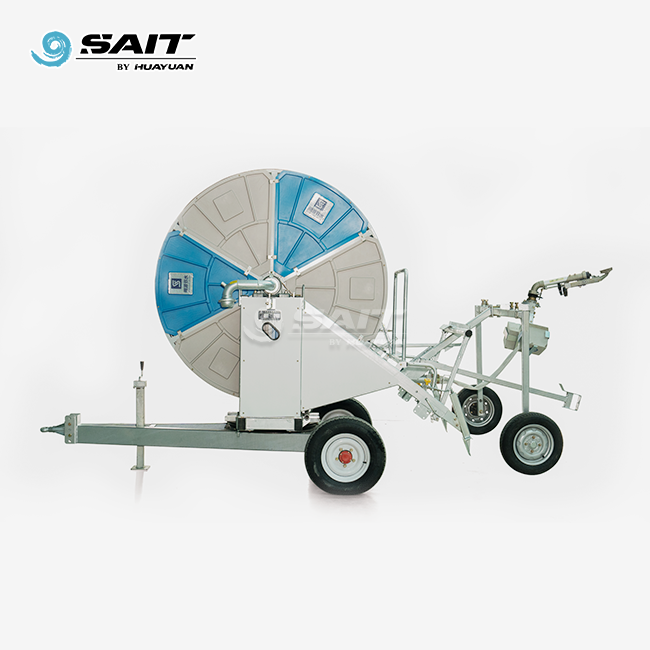
HUAYUAN SAIT's center pivot platform blends 20 years of industrial experience with BeiDou navigation and IoT integration. This setup keeps missed watering below 5% and uniformity above 90%, which are both better than the standards in the industry. There are three sizes of pipelines available: 5" (127mm), 6-5/8" (168mm), and 8-5/8" (219mm). These sizes meet all of the flow needs of industrial farms. Engineers can use span lengths ranging from 37.5m to 66.5m and overhang choices up to 25m to make shapes that fit unusual cadastral boundaries.
The hot-dip galvanized coating, which has a zinc thickness of at least 80µm, works much better than standard electro-galvanized coatings in salty or humid places. The total cost of ownership is much lower for brands with a planned service life of more than 20 years compared to competing names. It takes over 70% less water for a single machine to water 4 to 200 hectares per cycle than traditional flood methods.
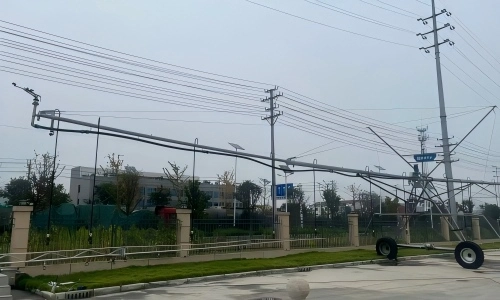
Installation, Maintenance, and Troubleshooting Essentials
Installation Best Practices
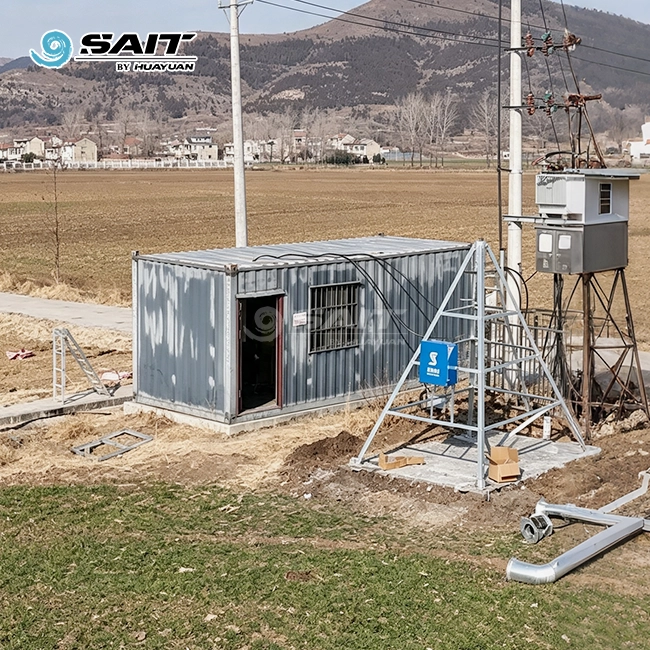
Two things about professional installation are most important: the size of the booster pump and the tuning of the sector valves. A pump that is too small causes constant pressure drops, and a sector stop that isn't set up correctly can wet pivot drive parts or completely miss the target area. HUAYUAN SAIT offers technical support and on-site installation supervision, which takes away this risk for first-time buyers or distributors setting up pilot demonstration units.
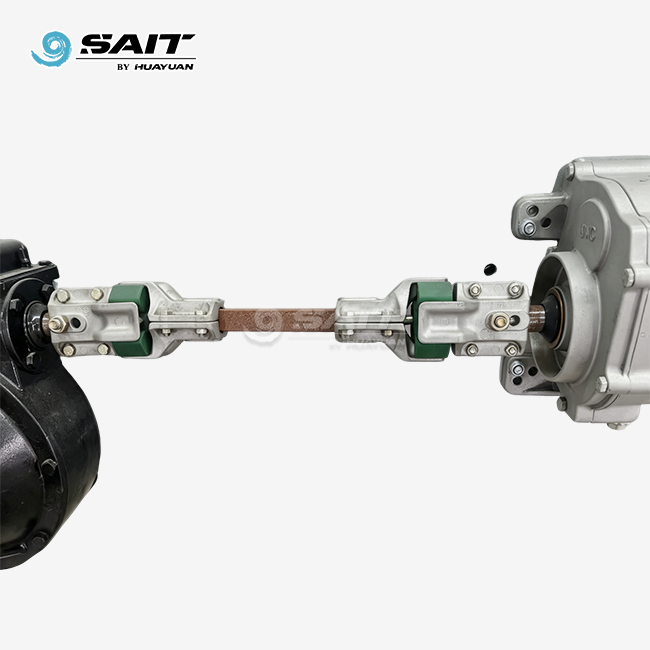
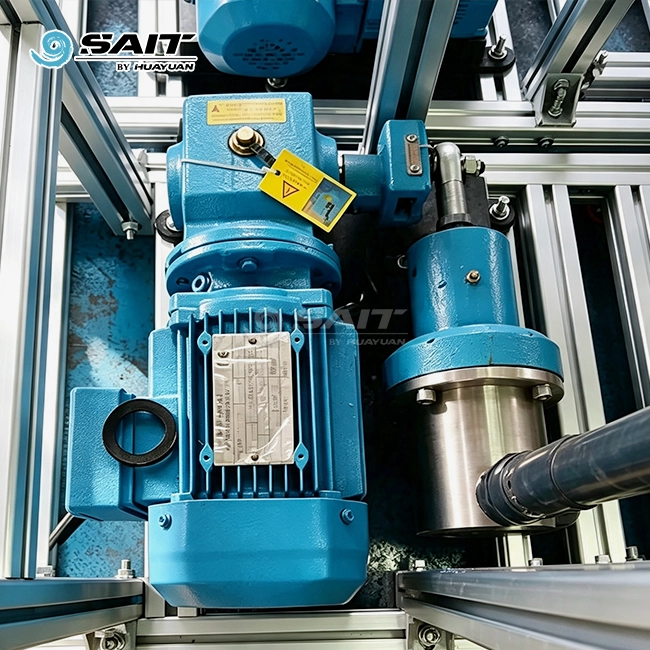
The 20mm and 22mm rod sizes of the truss rod and angle framing make sure that the load is evenly spread across the spans. This is especially important when the overhang lengths are 19.5m or 25m. Armored cable and gearmotors listed by UL and rated at either 25.5:1 (1.5hp) or 40:1 (0.75hp) deliver constant torque even when the field conditions change.
Routine Maintenance Protocol
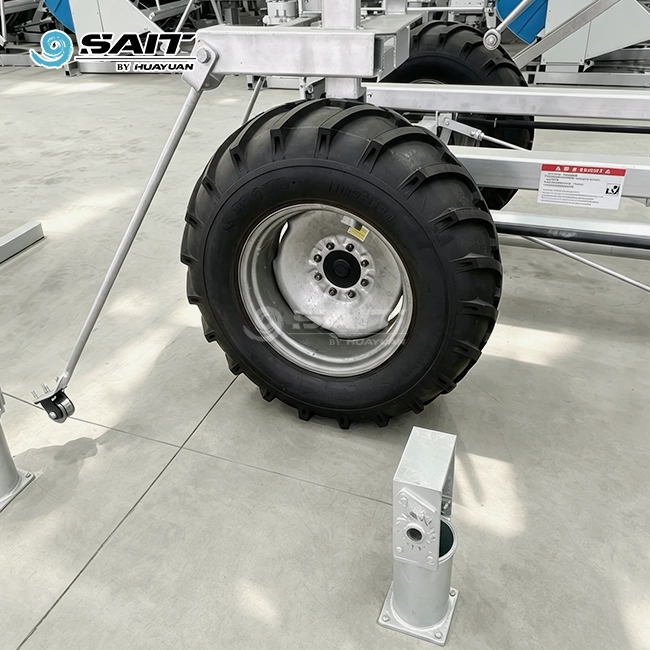
For a pivot end gun, by checking the solenoid diaphragm and internal pilot filters once a year, you can keep them from getting clogged with algae or mineral scale, which is the main reason why the gun doesn't work right. Once every two seasons, you should make sure that oil seals on wheel gears with 50:1 or 52:1 reduction ratios are still good. Tire choices include 11.2-24, 14.8-24, and 16.9-24 in both tube and tubeless styles. This lets you choose tires that are right for the load capacity of the soil, which helps keep fine-textured soils from getting compacted.
Procurement and After-Sales Support: How to Buy With Confidence
When you buy from a reputable company with a stable supply chain, you don't have to worry about lead times like many B2B buyers do when they deal with stock irrigation sellers. HUAYUAN SAIT can make 1,800 pivot and linear systems every year, which helps keep shipping plans. For wholesale setups, standard order wait times are 60 to 90 days. For test projects, the minimum order quantity (MOQ) for custom OEM builds with branded control panels or private-label tower assemblies is as low as one unit.
After-sales service includes a full warranty for one year, low-cost maintenance and part replacement for three years, and spare parts for life at the cost of the factory. International procurement requirements in North America, the CIS, and Africa can be met with ISO 9001 certification and a full set of export documents.
Conclusion
Choosing a center pivot end gun system is an investment in technology that will pay off for many years. The four steps that must be taken are matching the throw radius to the field shape, checking the pressure at the distal end, picking the right profile height for your crop, and making sure that the seller has a track record of good after-sales service. The HUAYUAN SAIT platform covers all aspects, from 80µm hot-dip galvanized steel to BeiDou-integrated SAIT smart control, making sure that commercial farming operations around the world have uniformity, durability, and coverage efficiency that can be measured.
FAQ
1. Is a booster pump always required for an end gun system?
Not all the time. If the mainline pressure of your pivot stays at least 40 PSI at the last tower during peak flow, you might not need a booster pump. Most large-scale operations with working ranges greater than 400 meters will need a 2–5 HP generator to keep the throw distance at a good level.
2. How do I adjust the spray arc to avoid irrigating roads or buildings?
The angle can be adjusted by mechanical stops on the base of the valve. These stops are usually between 90° and 180°. GPS-linked solenoid valves on smart-enabled systems like the SAIT platform can automatically shut off when the pivot passes pre-mapped obstacle zones with meter-level accuracy.
3. Can I retrofit an end gun onto my existing center pivot machine?
Yes, as long as the pressure requirements and the distal end connection flange are the same. The engineering team at HUAYUAN SAIT looks at how the equipment is currently set up and suggests suitable parts, such as custom overhang extensions from 2.7m to 25m to improve the throw shape.
4. What maintenance frequency does an end gun assembly require?
It is common practice to check diaphragm covers and pilot filters once a year. Checks for oil in the bearings and gears line up with when the main pivot drive system needs to be serviced each season.
Ready to Source a Center Pivot End Gun System? Contact HUAYUAN SAIT
For more than 20 years, HUAYUAN SAIT has designed and built precise irrigation systems for farms, government projects, and OEM wholesalers across six countries. Custom span combinations, private-label marking, and pilot orders from a single unit are all possible with our center pivot end gun system for sale. To get a price for your job right away, email our technical sales team at kevin@showyirrigation.com.
References
1. American Society of Agricultural and Biological Engineers. ASAE S398.1: Procedure for Sprinkler Testing and Performance Reporting. ASABE, 2017.
2. Evans, R.G., & King, B.A. Site-Specific Sprinkler Irrigation in a Water-Limited Future. Transactions of the ASABE, 2012.
3. Camp, C.R., Sadler, E.J., & Busscher, W.J. A Comparison of Uniformity Measures for Drip Irrigation Systems. Transactions of the ASAE, 1997.
4. Kincaid, D.C. Application of the Fair and Hatch Model to Sprinkler Distribution Patterns. Transactions of the ASAE, 2005.
5. Food and Agriculture Organization of the United Nations. Irrigation Water Management: Irrigation Methods. FAO Irrigation and Drainage Paper No. 45, 1988.
6. Howell, T.A. Enhancing Water Use Efficiency in Irrigated Agriculture. Agronomy Journal, Vol. 93, No. 2, 2001.
Get a tailored irrigation solution for your project — our engineering team is ready to support you from design to installation.