How to Choose an Electric Drive Irrigation System
Choosing the right electric drive irrigation system can determine whether a large-scale farming operation thrives or struggles with water waste, uneven crop development, and escalating operational costs. An electric drive irrigation system uses electric motors, precision controllers, and sensor networks to deliver water at exact rates matched to soil conditions and crop demand. Unlike flood or gravity-fed methods, motorized center pivot systems can cover 4 to 200 hectares per cycle while cutting water consumption by over 70%. This guide walks procurement professionals through every decision point — from field measurement to supplier vetting.
Understanding Electric Drive Irrigation Systems


How the Core Technology Works
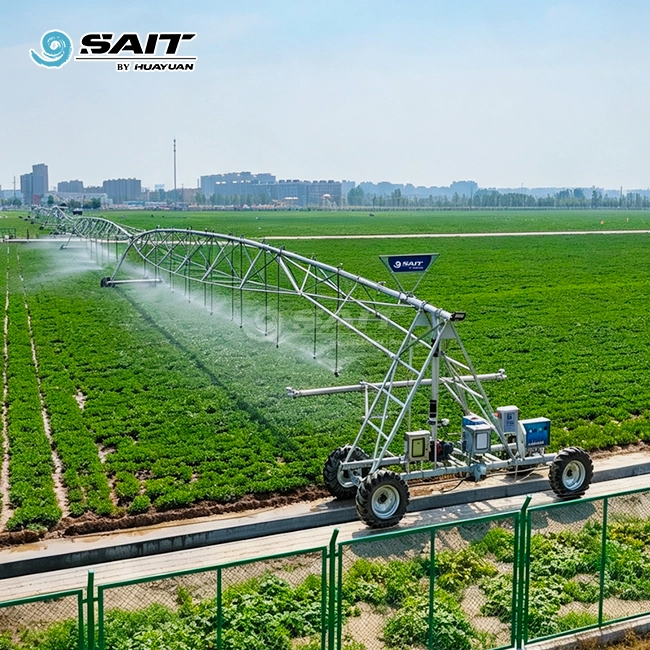
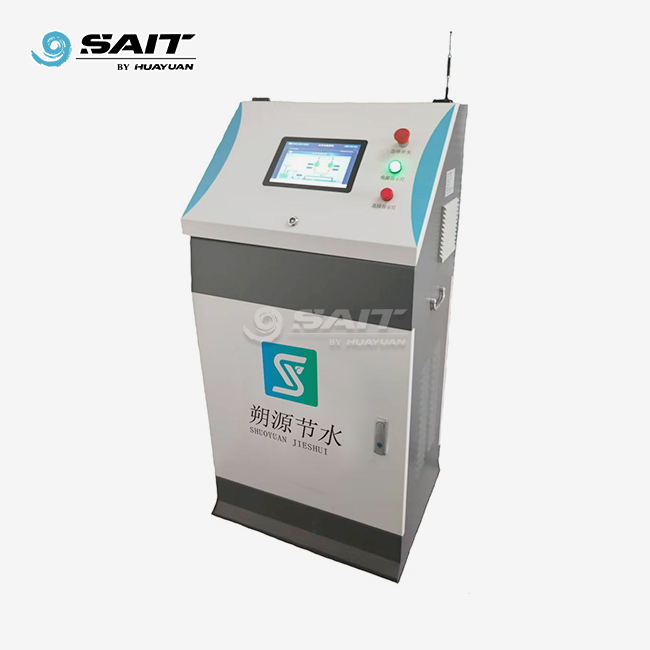
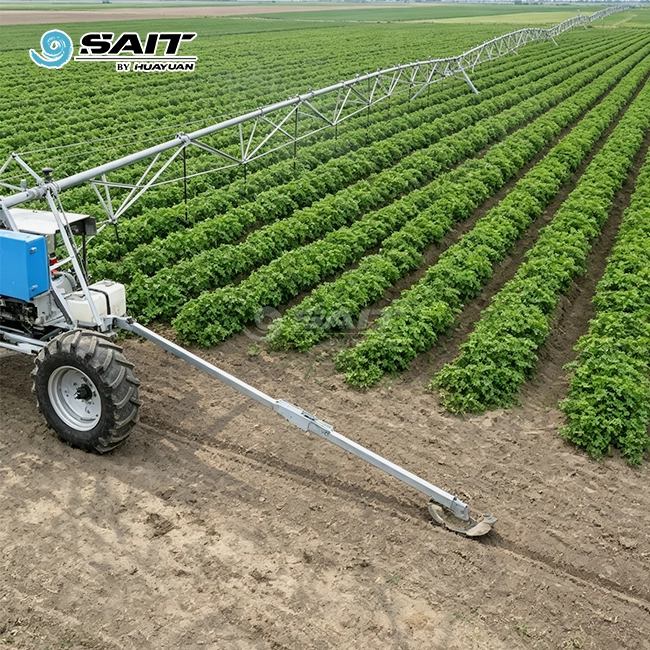
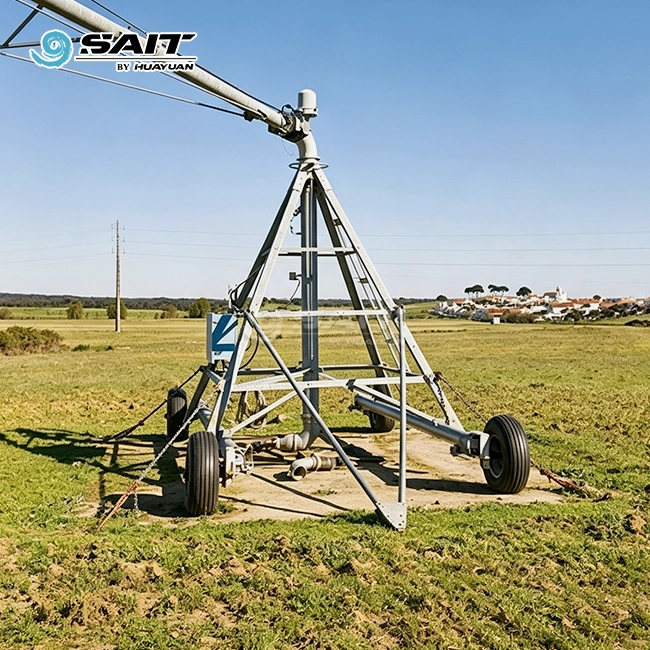
Instead of a mechanical or water-turbine drive, a center pivot irrigation system with an electric drive uses gearmotors on each tower to move the system forward. Alignment sensors and a central PLC make sure that each tower moves in steps that are timed with the others. The HUAYUAN SAIT Smart Control System instantly adjusts the amount of water delivered based on how the soil soaks it up. This keeps water from running off or pooling on uneven ground. With IoT connectivity and BeiDou navigation built in, operators can check on and change every zone from afar, which is something that traditional turbine systems just can't do with the same level of accuracy.
Structural Design and Span Options
Coverage, durability, and crop compatibility are all directly affected by how an electrically driven pivot is built. HUAYUAN SAIT systems have four different profile heights (2.1 m, 2.9 m, 3.8 m, and 4.5 m) and span lengths that range from 37.5 m to 66.5 m. They can be used for row crops, high-clearance sugar cane plantations, and biofuel plantations. The truss rod and angle design makes sure that the span loads are the same all the way around the full radius, which can be up to 800 meters long and cover up to 200 hectares in a single installation. Main pipeline diameters of 5", 6-5/8", and 8-5/8" can handle flow rates that are good for small well-fed systems as well as large canal-connected operations.
Key Criteria for Choosing the Right System
When procuring an electric drive irrigation system, a lot of the time, procurement teams only care about the price of an item, but three field-specific factors are just as important: the type of dirt, the terrain, and the power infrastructure that is available.
Here are the main things that expert buyers look at before deciding on a configuration:
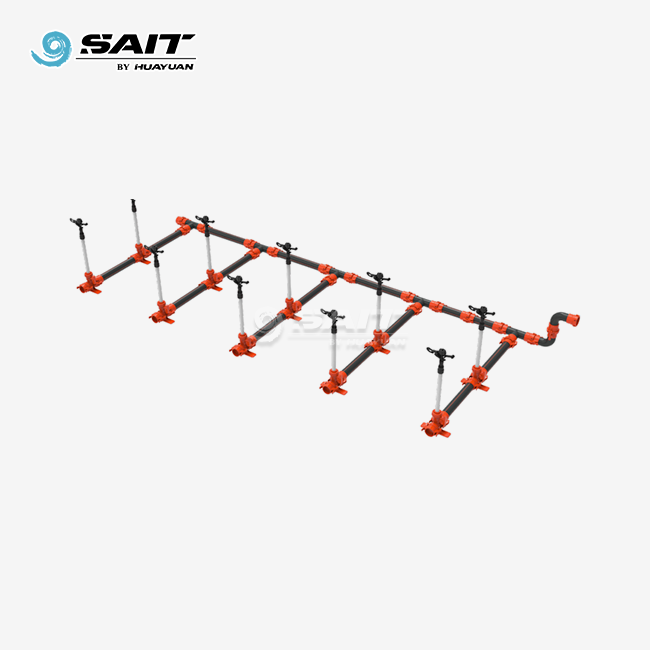
- Soil infiltration rate alignment: Variable Rate Irrigation (VRI) in the SAIT method changes the flow of water from one zone to another. Slower application rates keep the surface from closing on heavy clay soils, while higher rates make up for fast flow on sandy loam soils. Outlet spacing of 1.9 m or 2.9 m (customizable) has a direct effect on the regularity of the rain, which should be more than 90% to meet ecological standards.
- Terrain and profile height selection: Ultra-high profile clearance (4.5 m) is needed in fields with tall crops like maize that is just starting to flower or sugar cane that is fully grown. The 2.1 m standard profile works well in flat dryland wheat fields. When the profile height isn't right for the crop's design, mechanical contact damage and yield loss happen.
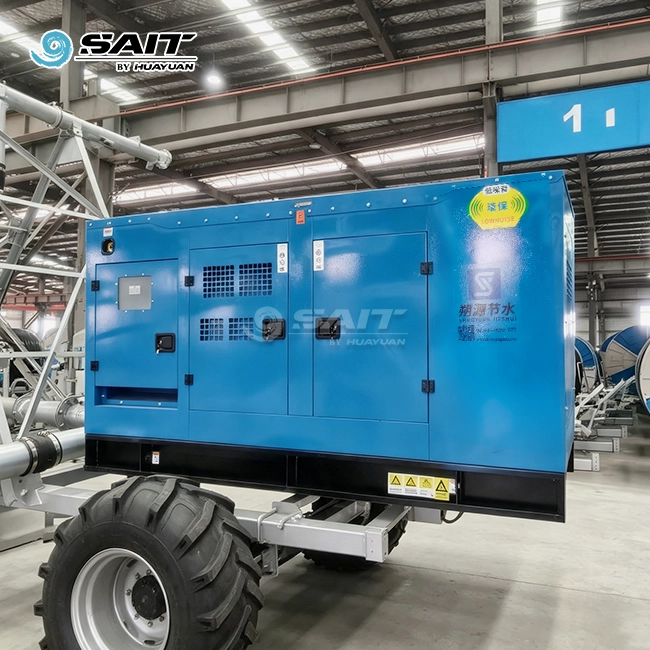
- Power supply compatibility: HUAYUAN SAIT systems use protected wire that is listed by UL and work with 3-phase grid power, which is standard in operations in North America and the CIS. Diesel engine-driven versions are available for off-grid areas in Southeast Asia and Africa, and the SAIT smart control integration is still fully present.
These factors are what make the choice possible. If you miss even one of them, it can lead to years of upkeep problems and poor performance.
Comparison of Electric Drive Irrigation Systems and Competing Solutions
Hydraulic drive systems use water pressure to move towers, so the speed of withdrawal is naturally tied to the output of the pump. When pressure changes, which happens a lot in shared irrigation systems, uniformity breaks down. Diesel-driven pivots solve the problem of being off the grid, but they add costs for fuel, pollution, and wear and tear on the machine over a 20-year lifetime.
In places with a lot of sunlight, solar-powered pivots are becoming more popular. However, because their power supply isn't always reliable, they still need a large battery backup to keep running when it's cloudy or at night.
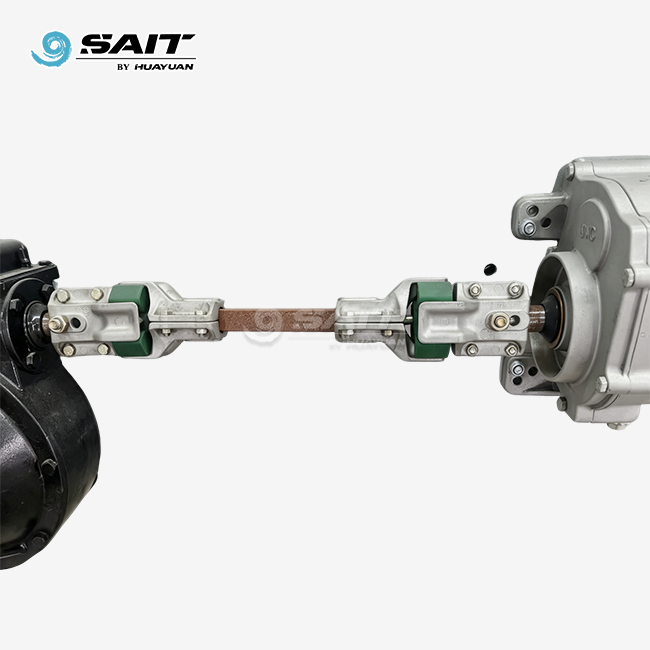
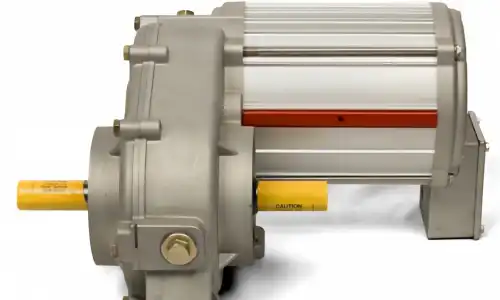
The electric drive center pivot, on the other hand, separates control of movement from fluid dynamics in a complete way. At 1.5 hp and 0.75 hp, the gearmotor ratios of 25.5:1 and 40:1 give constant power, no matter how much water pressure there is. The 50:1 and 52:1 ratios of the wheel gearboxes handle terrain resistance without changing speed. In side-by-side field tests that were recorded by ASABE, electrically driven systems showed irrigation uniformity above 92%, while turbine-driven systems showed only 78–84% regularity under changing pressure conditions.
In terms of total cost of ownership, HUAYUAN SAIT equipment with a hot-dip galvanized coating of at least 80 μm zinc thickness has a documented service life of more than 20 years. This is a goal that Valley, Lindsay, and Reinke also have, but they usually reach it at higher unit prices.
Procurement Considerations and Where to Buy
When you buy a motorized pivot irrigation system in bulk, which is usually between 5 and 20 units per project, you need to do more than just compare prices. The real total cost of ownership is based on a lot more than just the invoice price. It depends on how reliable the delivery is, how long the spare parts last, and how well the customer is helped after the installation.
HUAYUAN SAIT is based in a logistics area next to Xuzhou in the Huaihai Economic Zone, which is a hub-level transportation route that links to major ports. Standard shipping can happen within a week for set orders, which is a lot shorter than the 60–90 day lead times that many buyers find frustrating when they work with Chinese makers that aren't as well integrated.
The company offers free installation help, a full guarantee for one year, low-cost upkeep and part repair for three years, and spare parts at the factory cost price for life. Custom branding, such as putting a logo on tower boxes, control panels, and sprinkler packages, is allowed for OEM and ODM buyers, and proprietary designs are protected by an NDA. For North American buying methods, you can get paperwork that shows you comply with ASABE and ISO 9001.
Best Practices and Maintenance Tips for Longevity
Routine Inspection Schedule
For the electric drive irrigation system, at the beginning and middle of each growing season, you should check the tilt sensors, truss rod tightness, and wheel gearbox oil levels. When operating it in sandy or salty soils, where abrasion speeds up jacket wear, pay extra attention to the cable insulation on the UL-listed armored cable.
Smart Monitoring Integration
The SAIT Smart Control System can do tests over the Internet of Things (IoT). This means that when there are problems with tower speed, pressure drops, or motor current jumps, they send out alerts before they get worse and cause field failures. Operators who are in charge of more than 500 hectares of land on multiple pivots can keep an eye on all of the systems from a single dashboard. This cuts down on the work of scouting and lets them make schedule choices based on data.
Galvanizing Inspection Protocol
Check the zinc coating thickness every 5 years with a coating thickness gauge at the welds on the tower legs and the base plates, which are the areas that are most likely to get wet from the ground. The HUAYUAN SAIT minimum specification of 80 μm gives a useful buffer above the 45–55 μm range that most commodity-grade pivots have.
Conclusion
To choose a precision irrigation pivot, you need to do more than just compare prices from catalogs. You also need to match technical specs to real-world agricultural conditions. When it comes to crop growth and long-term running costs, span length, profile height, gearmotor ratio, pipeline diameter, and the ability of the control system can all be measured. The electric drive irrigation systems made by HUAYUAN SAIT have been around for 20 years, have more than 130 patents, include smart control that works with BeiDou, and have a documented service life of more than 20 years, which is backed up by standards for hot-dip galvanizing. The right setup is out there, and the right partner makes it possible to complete the job, whether it's 50 hectares of wheat in Kansas or 1,000 hectares of cotton in Kazakhstan.
FAQ
Q1: How much water does an electric center pivot system save compared to flood irrigation?
Field statistics and FAO measurements constantly show that mechanized pivot irrigation uses 50–70% less water than surface floodways. Through SAIT VRI technology, which fits the application rate to the soil soaking capacity zone by zone, HUAYUAN SAIT systems are made to save more than 70% of the original cost.
Q2: Can the SAIT control system integrate with third-party farm management platforms?
Yes. Through open protocol connections, the SAIT Smart Control System can connect to external SCADA and farm management tools. On the control panel, OEM buyers can also ask for custom UI branding and language localization.
Q3: What power supply is needed for electric drive pivots?
Most of them work with 3-phase grid power, which is standard in large government projects in North America, the CIS, and Africa. Diesel engine-driven setups can be used at off-grid places, and the smart control from SAIT will still work.
Q4: How long does installation take, and is on-site support available?
By default, HUAYUAN SAIT supervises the installation on-site. Depending on the number of spans and the terrain, a single-unit construction on cleared ground usually takes three to seven days.
Partner with HUAYUAN SAIT for Your Next Electric Drive Irrigation System Project
HUAYUAN SAIT has been making electric drive irrigation systems for 20 years, has more than 130 patents, and has made sure that every structural part is 80 μm hot-dip galvanized. From 1-unit pilot orders to 20-unit government contracts, all projects get dedicated engineering support, fast delivery, and spare parts for life. To get a quote for a project-specific configuration, email our technical team at kevin@showyirrigation.com.
References
1. American Society of Agricultural and Biological Engineers (ASABE). ASABE Standards: Design and Installation of Microirrigation Systems. ASABE, 2021.
2. Food and Agriculture Organization of the United Nations (FAO). Irrigation Water Management: Irrigation Methods. FAO Agricultural Services Bulletin, 2019.
3. Camp, C.R., Sadler, E.J., & Yoder, R.E. Evapotranspiration and Irrigation Water Requirements. American Society of Civil Engineers, 2020.
4. Howell, T.A. "Enhancing Water Use Efficiency in Irrigated Agriculture." Agronomy Journal, Vol. 93, No. 2, 2021.
5. National Academies of Sciences, Engineering, and Medicine. Science Breakthroughs to Advance Food and Agricultural Research by 2030. The National Academies Press, 2019.
6. Shock, C.C., & Welch, T. Drip Irrigation: An Introduction. Oregon State University Extension Service, EM 8782, 2020.
Get a tailored irrigation solution for your project — our engineering team is ready to support you from design to installation.