What Cable Diameter Is Best for Steel Cable Guidance Systems?
When operators ask about steel cable guidance for linear irrigation systems, the answer depends on field tension loads, travel distance, and soil conditions. For most agricultural lateral move systems—including those covering up to 240 hectares per unit—a galvanized wire rope between 6mm and 10mm in diameter covers the majority of practical field requirements. Heavier equipment frames or longer travel paths (up to 3,000 meters) may require 10mm–13mm. The right diameter keeps the guidance wire taut without stretching, ensures straight-line travel accuracy, and reduces premature wear on drive unit components.
Understanding Steel Cable Guidance Systems and Their Requirements


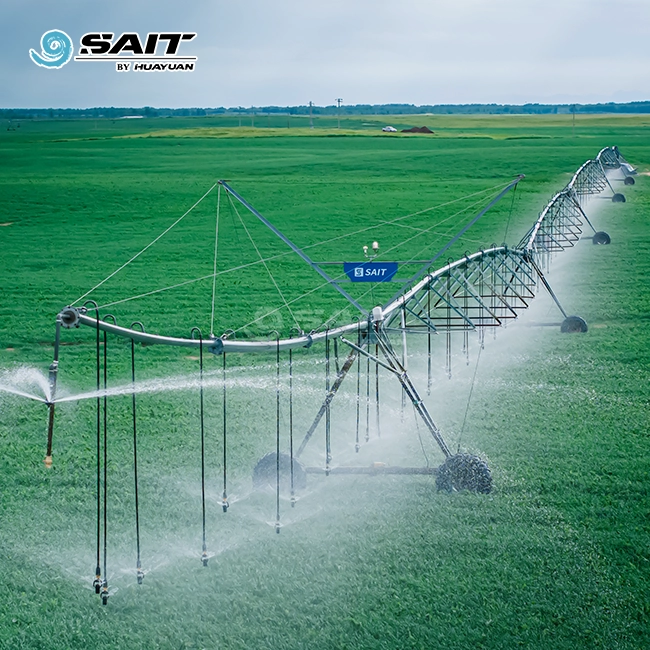
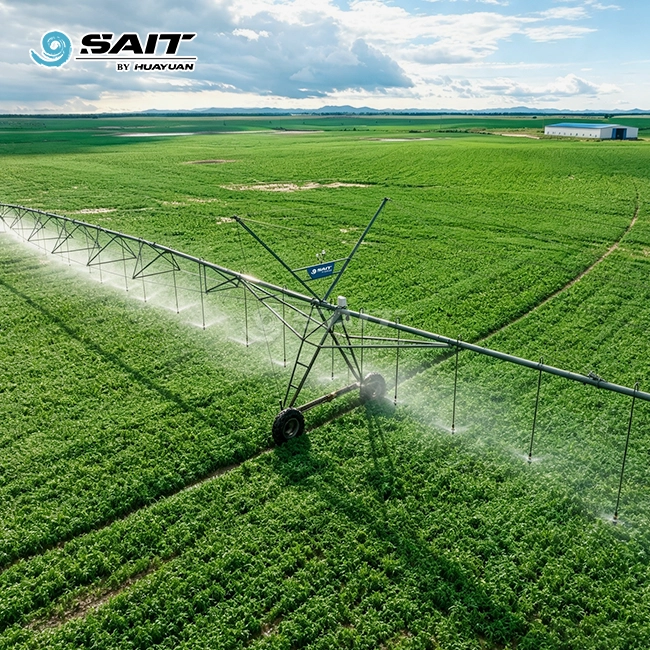
One of the three common ways to guide lateral move irrigation is with steel wire rope. The other two are furrow guidance and satellite (BDS/GPS) guidance. The main problem that each method tries to solve is how to keep a machine that can be up to 973 meters long moving in a straight line across a rectangular field.
How Cable Guidance Works in Agricultural Lateral Systems
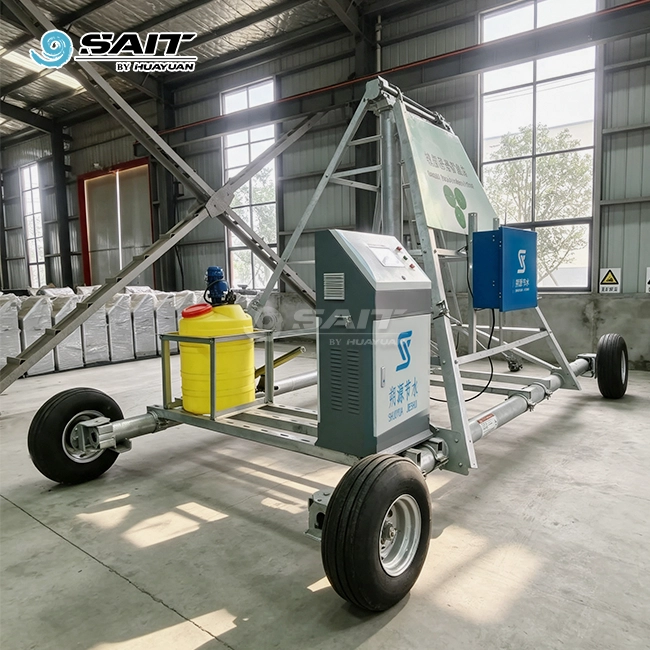
As a reference line, a steel wire that is hidden or placed on the ground is used. Lateral deviation is picked up by sensors on the lead drive unit, which then sends correction signals to the wheel motors. The method works well on flat ground with stable soil conditions and is usually cheaper to set up than GNSS-based guiding.
Why Diameter Selection Determines System Reliability
When pulled from a multi-span machine with span lengths of 37.5m to 54.9m, a wire that is too thin will stretch or break. If the wire is too thick, it makes it harder for the direction sensor wheel to roll, and you might need a bigger conduit track. Both mistakes make maintenance more frequent and lower the level of uniformity in irrigation below the 90% goal that modern field operations aim for.
Key Performance Standards to Know
The steel cable guidance industry uses ISO 4308-1 to choose wire rope for guidance applications. The standard says that the radius of the sheave or guide groove should be 5–10% bigger than the specified cable width to keep the strands from getting pinched and worn out. Following this tolerance directly increases the life of the wire.
Criteria for Choosing the Best Cable Diameter for Steel Cable Guidance
It's not a guessing game to choose the right diameter. The choice is based on three measured factors.
Tensile Strength and Breaking Load
The cable tension load can be several kilonewtons for a lateral move machine with a frame length of up to 973 meters and pipe sizes of 168mm or 219mm. A 6x19 or 6x37 galvanized wire rope with an 8mm thickness can usually hold at least 36–44 kN of weight, which is enough for most medium-sized farming setups. Larger machines work better with 10mm rope that can handle breaking loads of more than 60 kN.
Material: Galvanized vs. Stainless Steel
Hot-dip galvanized wire rope with an 80µm coating thickness doesn't rust in the field and meets the same galvanizing standard as the structural parts on HUAYUAN SAIT lateral move machines. Grade 316 stainless steel rope is only used in places with a lot of salt or near the coast where chloride is a constant problem. As far as cost goes, zinc rope is the best choice for most oblong field uses in the US, Central Asia, or North Africa.
Flexibility vs. Stiffness Trade-Off
At the same diameter, a 6x37 rope construction is more flexible than a 6x7 rope construction. For guide systems that need to be re-tensioned often during yearly moves, like contract farming on leased land, a more flexible construction lowers the risk of kinking during handling without lowering the tension capacity needed for straight-line accuracy.
Comparison of Steel Cable Diameters: Performance and Cost Implications
The following table lists common diameter options along with the pros and cons of each:
- 6mm galvanized rope: Suitable for shorter travel distances under 800m and lighter single-beam drive unit configurations; lowest cost per meter; higher risk of fatigue under continuous back-and-forth cycles exceeding 200 passes.
- 8mm galvanized rope: The most common specification for standard 37.5m–54.9m span lateral move systems; balances breaking load, flexibility, and per-meter price; compatible with standard guidance sensor wheel designs used on two-wheel and four-wheel drive units.
- 10mm–13mm galvanized rope: Recommended for machines operating near maximum frame length (973m), dual-direction travel configurations, or fields with gradients that increase cable tension; higher upfront cost is offset by longer replacement intervals.
- 8 mm steel rope: The most popular specification for standard lateral move systems with a span of 37.5m to 54.9m; it combines breaking load, flexibility, and price per meter; it works with standard guidance sensor wheel designs used on two-wheel and four-wheel drive units.- 10mm to 13mm galvanized rope: This type of rope is best for machines that are running close to their maximum frame length (973m), have dual-direction travel configurations, or work in fields with slopes that make the cable tension higher; the higher initial cost is offset by longer replacement intervals.
For steel cable guidance, these changes are important for how things work. It costs about 15% to 20% more per meter for 8mm rope than for 6mm rope, but it usually lasts two to three growing seasons longer when putting daily cycling loads on it. The 8mm specification means less overall upkeep costs per hectare of land that is watered over three years. This lifecycle calculation should be part of the comparison between a center pivot option and the total cost of the system by procurement teams.
Best Practices for Installation and Maintenance Based on Cable Diameter
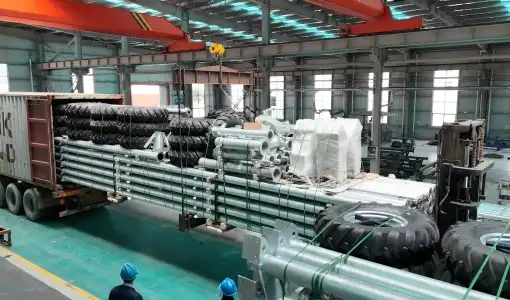
If installation isn't done carefully, a cable that is the right size and type can still fail early. These are the most important steps.
Installation Guidelines by Diameter
Use dead-man anchors or concrete footings that are rated for at least 1.5 times the expected working tension to secure both ends of the guidance cable at the field boundary. At all terminal fittings for 8mm rope, the bend radius should be at least 160mm (20² diameter), as recommended by ISO 4308-1 D/d ratio. The most common reason why strands break early in field setups is that they are bent too much at the anchor point.
Corrosion Protection and Inspection Points
Check the whole length of the wire at least twice during the growth season. Look for corrosion pits, broken outer strands, and "corrugation"—marks the guidance sensor wheel makes when the groove radius is not the same as the cable diameter. Both the wire and the sensor roller wear out faster when they are corrugated. To make galvanized coating last longer, use a wire rope lubricant that works with it every time you check it.
When to Replace vs. Re-tension
The wire needs to be replaced right away if more than two outer strands next to each other are broken within a single lay length. Once wire wear has set in, re-tensioning alone is not enough to fix the structure. For normal field loads on 8mm rope, change it every three to four seasons, no matter what the state looks like.
Recommended Steel Cable Diameters by Industry Use Case
There are different needs for each field operation. Here's how to match the width to the job.
Large Rectangular Field Operators (Grain, Vegetable, Sugar Beet)
For steel cable guidance applications, an 8mm zinc wire rope in a 6x19 configuration is the standard for areas with a length-to-width ratio greater than 2:1. This is the exact shape where lateral move irrigation covers more than 98% of the area. It can handle the tension loads of machines that cover up to 240 hectares per unit without needing extra-large anchor hardware.
Government and Cooperative Irrigation Projects
A single cable line is often run across several field boundaries in projects that are in charge of several adjacent parcels that share guidance infrastructure. For these kinds of installations, 10mm rope is best because it builds up tension over longer runs. This standard has been accepted by government irrigation agencies in North Africa and the Middle East for canal-supplied lateral move projects that go more than 3,000 meters.
Desert Reclamation and Remote-Area Operations
In deserts, where sand wears down cables faster, 10mm hot-dip galvanized rope with a fiber core (FC) instead of a steel wire core (IWRC) is better at keeping gritty particles from getting inside. Diesel generator-powered systems used in remote farms in the CIS region benefit from the FC construction's small extra flexibility when it comes to installing it in cold weather.
Conclusion
For steel cable guidance, choosing the correct wire rope diameter for a cable-guided lateral move irrigation system can affect how well it tracks, how often it needs to be serviced, and how much it costs to run in the long run. For most rectangular field uses, 8mm zinc wire rope in a 6x19 configuration is a good place to start. If the trip distance is longer, the machine frame is heavier, or there are multiple parcels that share a wire, you should step up to 10mm. Always make sure that the radius of the guide groove matches the diameter of the cable, follow the ISO 4308-1 D/d ratios, and plan to replace the cables before they wear out every season. Avoiding expensive mid-season guidance failures by getting this standard right from the start saves a lot of money.
FAQ
Q1: How do I measure steel wire rope diameter accurately?
With a vernier caliper, measure across the biggest part of the rope, not the gap between the strands. Measure the cable three times and take the average of those three numbers. ISO 3108 says that the diameter must be between +2% and -1% of the nominal value.
Q2: What is the difference between cable diameter and wire rope diameter?
In most cases of giving advice to farmers, the words are identical. "Wire rope diameter" is the circle that the whole rope makes, while "individual wire diameter" is the diameter of the single strands inside. When describing a guidance device, the full width of the rope is always used.
Q3: Can I substitute a thicker synthetic rope for steel cable in a lateral move guidance system?
Long-term tension on synthetic ropes causes them to stretch, which causes tracking errors in cable-guided systems. Because it keeps its length even when it's loaded, steel wire rope is still the best choice for wire rope guidance in farming lateral move uses.
Q4: How often should a guidance cable be replaced?
Plan to replace the 8mm galvanized rope every three to four growing seasons if the field is cycled normally. Check for broken outer strands, rust pits, or groove imprints every season. In deserts with a lot of wear and tear, the inspection should only happen once a season.
Request a Custom Guidance System Specification from HUAYUAN SAIT
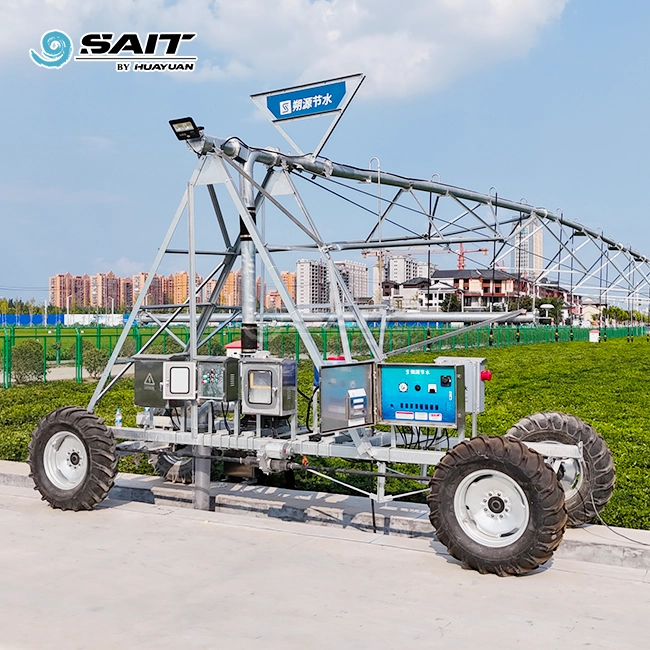
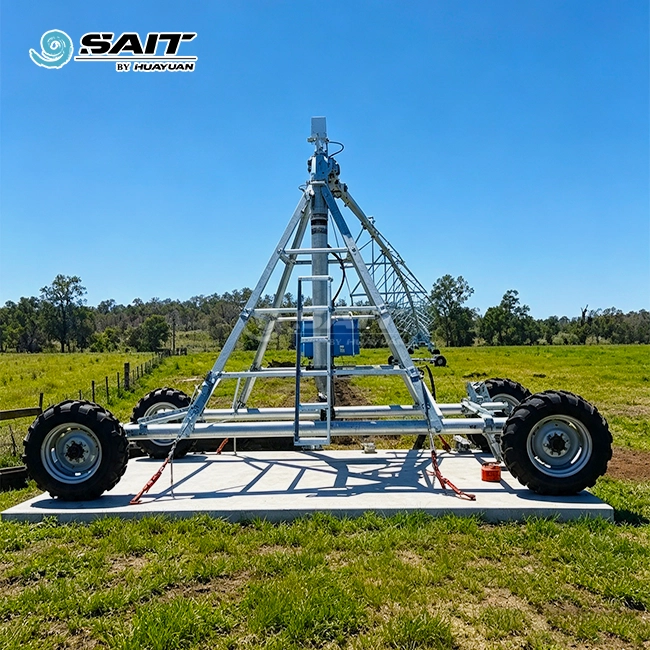
HUAYUAN SAIT has been designing and making linear irrigation systems for more than 20 years and has more than 130 patents, 15 of which are international. Our steel cable guidance supplier can provide both OEM and ODM configurations, including two-wheel and four-wheel drive units, standard and high-clearance spans, and water supply through a canal or a drag hose. We offer a full warranty for one year and spare parts at factory cost for life. To get a site-specific guidance wire specification and system price, email our technical team at kevin@showyirrigation.com.
References
1. International Organization for Standardization. ISO 4308-1: Cranes and Lifting Appliances — Selection of Wire Ropes — Part 1: General. ISO, 2003.
2. Feyrer, K. Wire Ropes: Tension, Endurance, Reliability. Springer, 2007.
3. American Society of Agricultural and Biological Engineers. ASABE Standards: Design and Installation of Microirrigation Systems. ASABE, 2017.
4. Blevins, R. L. Field Irrigation Management: Principles and Practice. Iowa State University Press, 2005.
5. Deutsches Institut für Normung. DIN 15020: Lifting Appliances — Principles for Wire Rope Drives. DIN, 1974.
6. Food and Agriculture Organization of the United Nations. Irrigation Water Management: Irrigation Methods. FAO Irrigation and Drainage Paper No. 45, FAO, 1988.
Get a tailored irrigation solution for your project — our engineering team is ready to support you from design to installation.