What equipment can be equipped with fertigation?
A fertigation system integrates nutrient delivery directly into an irrigation water supply, allowing soluble fertilizers to reach plant root zones with measurable precision. Compatible equipment includes drip irrigation lines, center pivot and linear sprinkler systems, micro-irrigation networks, greenhouse hydroponics setups, nutrient injection pumps, multi-stage filtration assemblies, EC/pH sensors, flow meters, and automated controllers. Each component plays a defined role in maintaining accurate nutrient ratios and consistent application rates across large-scale open fields, orchards, and protected growing environments.
Overview of Fertigation Systems and Their Compatible Equipment
What Is a Fertigation System?
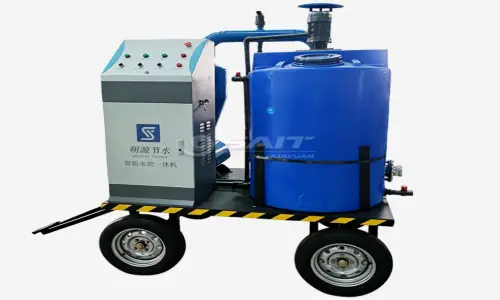
A method called fertilization combines watering and fertilizing into a single automatic step. When soluble nutrients are mixed with pressurized water, they go straight to the root zone through irrigation pipes that are already in place. This is better than spreading dry fertilizer or foliar fertilizer separately. It was found in 2019 in the journal Agricultural Water Management that fertigation can make the use of nitrogen up to 30% more effective than spread treatment. This is a clear agricultural benefit for businesses.
Core Operating Principle
There are three main parts that make up a fertigation system: a station for storing and mixing fertilizer, a unit for injecting and changing the amount of fertilizer, and a network for getting the fertilizer to the plants. Every time the plant is watered, the set limits for pressure, flow rate, and amount of nutrients must be met. No matter how big the field is or what stage the crop is in, growers can get the same EC and pH levels at the emission point when these three zones work together.
Equipment Categories Overview
It is possible for hydraulic hardware, sensing equipment, and computer control systems to work together. An important part of the hydraulic system is the lines, pressure tanks, and injection pumps. At this level, there are EC probes, pH sensors, pressure detectors, and ultrasonic flow meters. The management layer is made up of PLCs, touchscreens, devices that are linked to 4G networks, and mobile app platforms. The whole equipment chain is made up of these groups, which any buying team should look at before they start a job.
Key Types of Irrigation Equipment Compatible with Fertigation
Drip Irrigation Systems
Low-flow emitters spaced along lateral lines let drip irrigation send water and nutrients that have been mixed with the soil straight to the roots. This method works well on farms, vineyards, vegetable rows, or greenhouse beds. Since emitters only work at low pressures (0.1 to 0.3 MPa), they work well with proportional injection pumps that add nutrients in different amounts without changing the pressure balance further downstream.
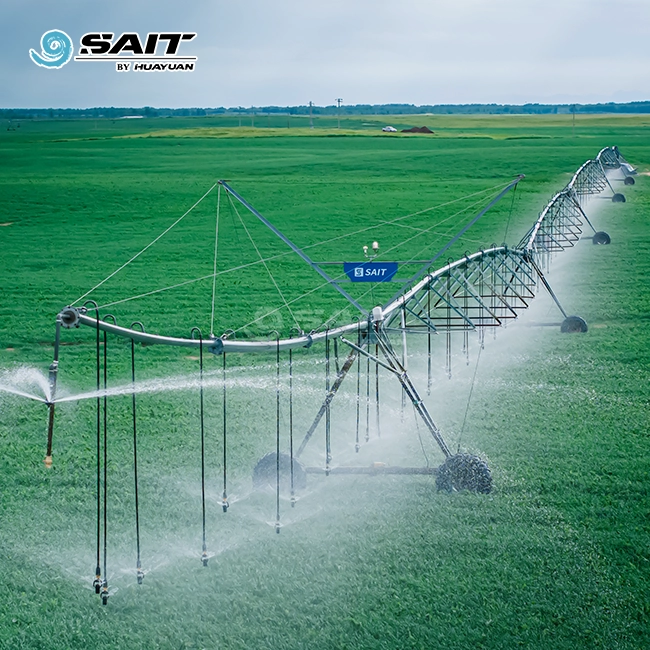
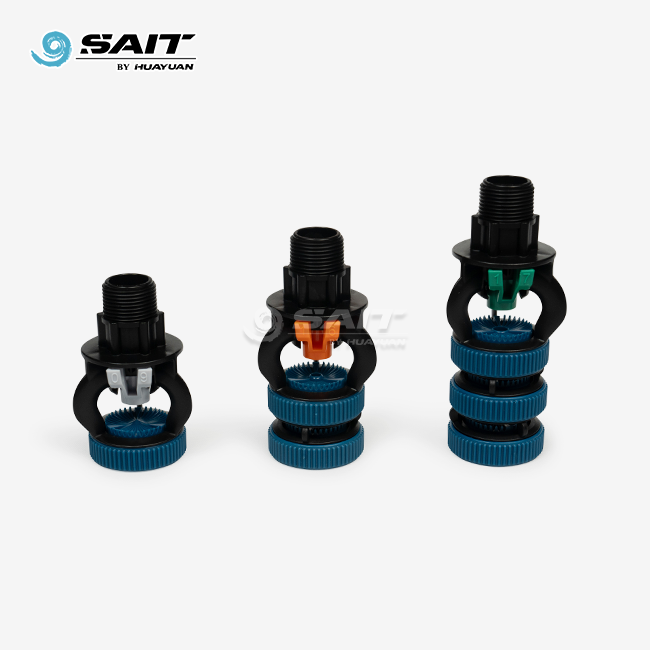
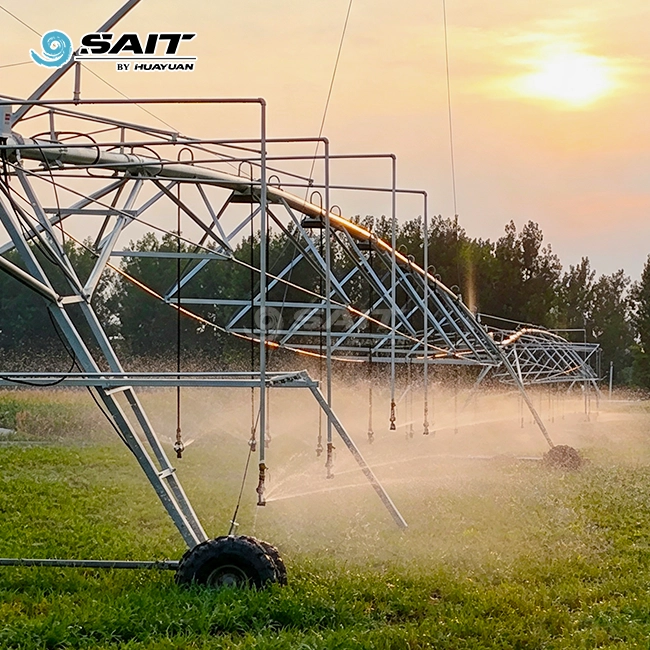
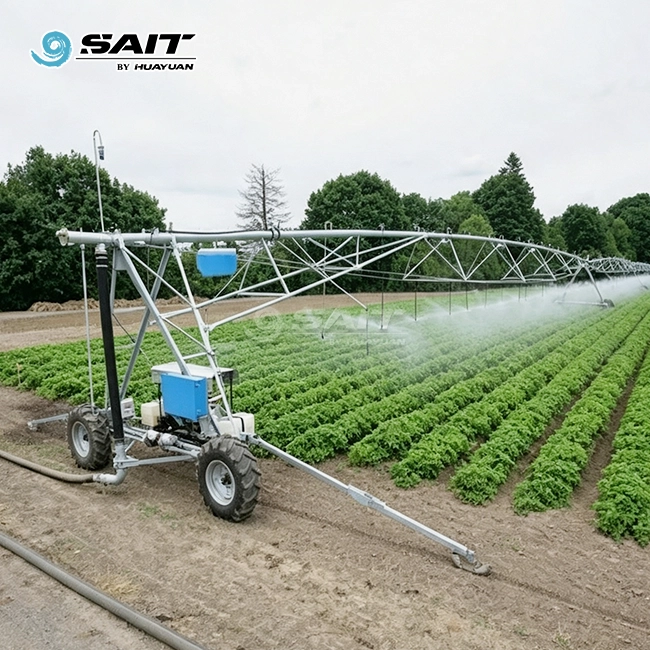
Center Pivot and Linear Sprinkler Systems
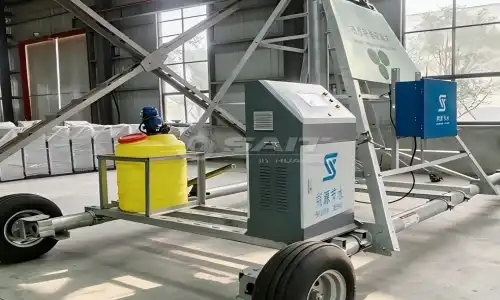
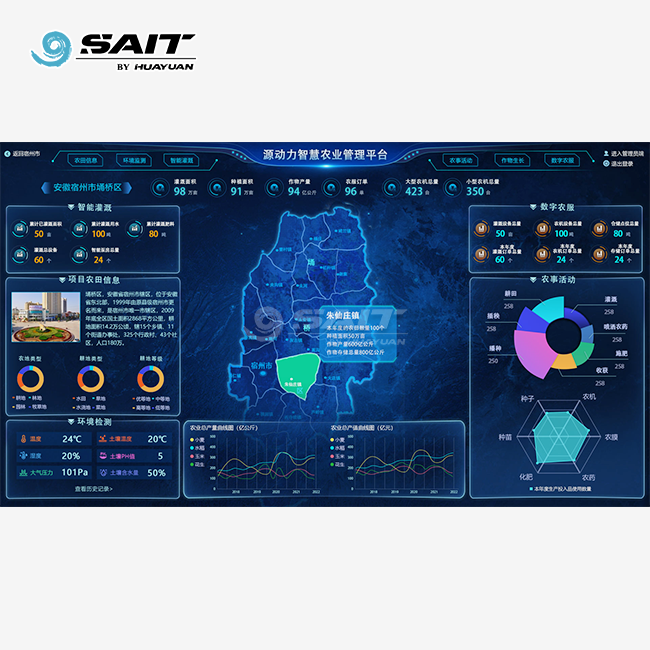
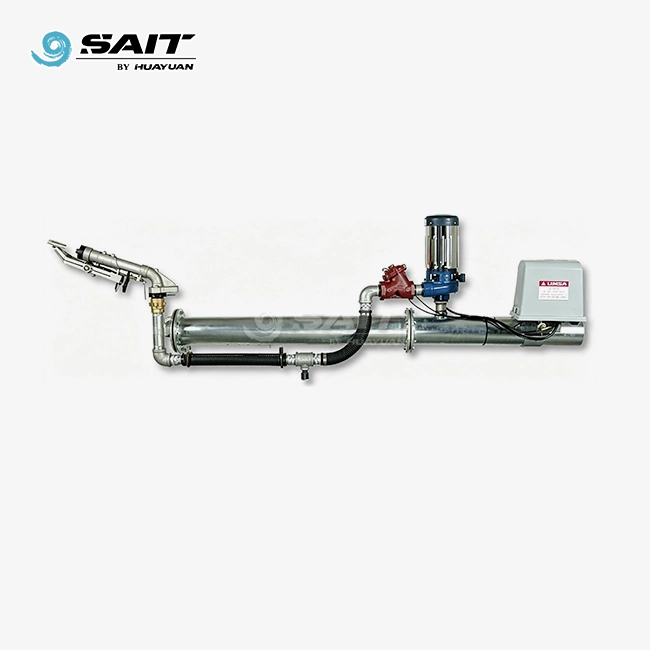
Center pivot and linear systems can move over a lot of open land in one pass and can accept farming inputs at the head control unit. The Huayuan SAIT Smart Head Control System is connected at the pivot point. It works with one box to control the pump, clean the water, and add fertilizer. The DN200 connection lets water come in and go out, and the 11 kW pressure pump can handle high flow rates of up to 1,000 L/h per channel. So it's great for row crops, grain fields, and big blocks of almonds or citrus.
Greenhouse and Hydroponic Systems
When it comes to EC and pH, ranges that are smaller are needed in controlled environments compared to open fields. Most people who own greenhouses use pumping systems with multiple channels that send nitrogen, phosphorus, potassium, and acid streams at different times. Recirculating hydroponic systems need to be monitored in real time so that nutrients don't get lost. This is the reason why EC and pH monitors, along with automatic dosing controllers, are generally included in the requirements for buying greenhouses for businesses.
Components and Accessories Essential for Fertigation Equipment
Injection Pumps and Proportioning Units
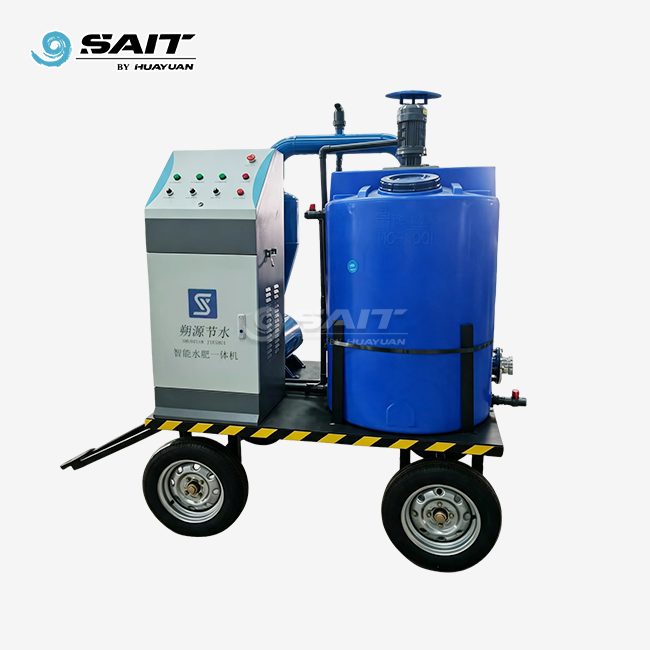
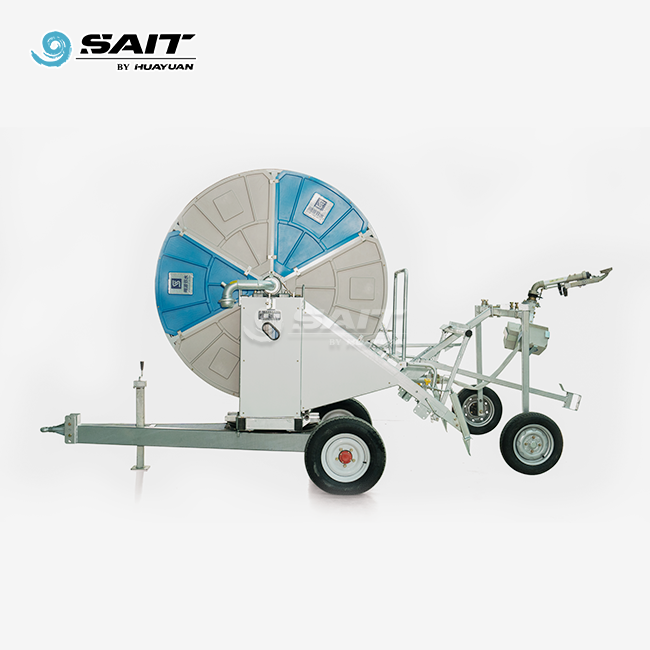
Dosing precision can be changed by the injection pump in a number of flow situations. You can change the single-channel injection rate of HUAYUAN SAIT's mobile fertilizer injection unit from 10% to 100% of its rated output. It ranges from 60 to 1,000 L/h. It runs on 380V and has a pressure pump that is between 0.75 and 1.5 kW. The pressure is between 0.2 and 0.7 MPa. One to two channels can be used. It has an ARM9-based touchscreen with a resolution of 1024x600 and a ThreadX OS controller that supports 4G connectivity and RS485 communication. It can be used both locally and remotely.
Filtration Assemblies
Filters getting clogged is one of the most common servicing problems that fertigation workers in places with dirty water have. When the filter stack is set up right, it gets rid of solids in the fluid before they reach the pumps or emitters. At the heart of the Smart Head Control System are a DN100 spinning filter and a DN100 automatic self-cleaning filter with a 120/130 mesh size. This two-stage system works with water sources that have a lot of sediment in them. It also cuts down on the time needed for cleaning by hand, which lowers the cost of labor for large-scale operations.
The main parts of the Smart Head Control System filtering and sensing package are: This DN100 rotating and self-cleaning filter gets rid of particles at 120/130 mesh before they hit injection parts. This protects pump seals and emitters from damage.
- DN100 centrifugal + automatic self-cleaning filter: Removes particulate matter at 120/130 mesh before it contacts injection components, protecting pump seals and emitters from abrasive wear.
- DN115 ultrasonic flow meter: Measures actual injection channel flow without moving parts, eliminating wear-related drift in dosing calculations and providing reliable data for SCADA integration via dual RS485/Modbus RTU.
- Two-stage SPD rated at 80 kA short-circuit current: Guards the control panel against voltage spikes from lightning or grid instability, which is a frequent cause of electronic failure on rural agricultural sites.
It has an 80 kA short-circuit current limit and is made of two stages. It protects the control panel from voltage spikes that can be caused by lightning or a shaky grid, which is a common reason why electronics break down on farms.
Smart Controllers and Sensors
The three most common problems irrigation workers say they see are screens that are jammed, flow data that is wrong, and lightning damage to the controls. These parts fix all three of these issues.
How to Select the Right Equipment for Your Fertigation Needs
Match Equipment to Farm Scale and Crop Type
They work well in yard blocks or orchards that are less than 5 hectares and only have one path. Open-field grain operations with center pivot coverage are examples of big projects that cover hundreds of hectares. For these kinds of projects, you need a head control unit with a high-volume pump, multiple steps of filtering, and remote telemetry. It's not possible to lose too much or too little fertilizer when the operating pressure, channel count, and injection rate are all set to the right levels for the crop.
Automated vs. Manual Fertigation Solutions
At first, manual Venturi injectors are cheap, but the user has to keep an eye on them all the time to make sure the EC values stay stable. On the other hand, automated proportional systems change the input rates right away based on what the flow and pressure tell them. For companies that work with 5 to 20 systems per project cycle, the extra time saved by automation usually pays for itself in one growth season. With a mobile app, HUAYUAN SAIT's systems can be managed from afar, which saves even more time than managing them in person.
Evaluate Integration and Certification Requirements
People in North America want to buy things that can connect to platforms like Climate FieldView or John Deere Operations Center and work with materials that have been approved by the USDA. Those who run gardens in Europe need to make sure that the plants have CE approval and can be controlled by either the Priva or Hoogendoorn designs. OEM and ODM services are available from HUAYUAN SAIT. These include custom branding for the control panel, translated UI languages, and custom API development for third-party platform interaction. In a 30-day modification window, these services meet the needs of regional buyers.
Installation and Maintenance Considerations for Fertigation Equipment

Professional Installation Steps
If you put things in the right order, you can avoid pressure mismatches and chemical problems. The first step is to check the hydraulic baseline of the current irrigation network. After that, the filter stack is put before the injection point, the injection pump is set to the right input pressure, and the sensors are checked against NIST-based EC and pH standards. HUAYUAN SAIT offers expert help and on-site installation for all of their systems. This means that fewer mistakes are made when they are first put in place.
Routine Maintenance Protocol
Maintenance protects the accuracy of dosing and makes equipment last longer. The filters should be checked once a week, the injectors should be checked against volumetric standards once a month, and the EC/pH probes should be re-calibrated every season. The covers on HUAYUAN SAIT units are rated IP55, which means they keep water and dust out. This means the insides of the units don't need to be cleaned as often. There is a full warranty for one year, a low-cost maintenance program for three years, and spare parts that are always available at factory prices. This means that operators can make solid budgets for maintenance.
Troubleshooting Common Issues
When workers mix nutrient solutions that don't mix well or leave the lines to dry between rounds, they often end up with fertilizer crystals in the injection lines. When you flush the injection channels with clean water after each fertigation event, crystals don't form. If the filter's differential pressure goes above 0.05 MPa, it tells the media that it needs to be backwashed. If you take care of these two issues first, you can avoid most of the unexpected downtime that fertigation operators in business settings report.
Conclusion
Injection pumps, multistage filters, smart controls, and flow meters are just a few of the hardware components used in a fertigation system. Each piece has to work with the size, type of crop, and quality of water of the operation. Drip, sprinkler, and greenhouse systems all need to work with different kinds of plants. If you pick parts without checking to see how they can fit together, you might have to pay a lot to fix them later. HUAYUAN SAIT has more than 130 patents and has been making things for 20 years. From the fertilizer tank to the field sprayer, their product line has everything you need. You can get the systems you choose from our plant in the Xuzhou area in just one week, and we offer full after-sales service to make sure they work well and are always available.
FAQ
Q1: Can I retrofit an existing drip irrigation system with fertigation equipment?
Yes. For the most part, you don't have to change the whole system to add fertigation parts at the filter station or main line. It is important to make sure that the working pressure, filter capacity, and thickness of the current pipe all fit what the injection unit needs. HUAYUAN SAIT's mobile injection unit has DN25 connections for both the end and the beginning. Since most drip networks are already set up to work at 0.2 to 0.7 MPa, this one does too.
Q2: What causes fertilizer crystallization in injection lines, and how do I prevent it?
When fertilizer concentrates that don't mix well are mixed too soon, or when solution waste dries inside the tube between cycles, crystallization takes place. The last step in each fertigation cycle is to flush the injection tubes with clean water. This gets rid of any extra residue before it forms. Putting calcium-based and phosphate-based concentrates in different lines keeps the injection unit from reacting in a way that could cause precipitation.
Q3: How does fertigation improve nutrient use efficiency compared to broadcast fertilization?
Plants get nutrients directly to the active root zone at controlled rates when they fertilize. Less water is lost through surface runoff and volatilization. Studies published in the journal "Irrigation Science" show that nitrogen and potassium are taken up 20–35% more effectively when drip-based fertigation is used instead of broadcast application. Following EC in real time keeps the solution's concentration in a range that the plant can best use at all stages of growth.
Q4: Does the Smart Head Control System support third-party SCADA integration?
Yes. With dual RS485 and Modbus RTU, the controller can talk to other devices. You can also make your own APIs for third-party farm management systems. In other words, it works with most commercial SCADA systems used in precision farming.
Connect with HUAYUAN SAIT for Your Fertigation System Needs
It is known that the company HUAYUAN SAIT has been making fertigation system equipment for 20 years. They have OEM and ODM designs for yards with a lot of space, orchards, and greenhouses. From the time you start planning the setup until the equipment is put into use on-site, our engineering team is there for you. Their work is guaranteed for one year, and there is an upkeep program for three years after that. Email us at kevin@showyirrigation.com to get a quote right away.
References
1. Phene, C. J., & Howell, T. A. (1984). Soil sensor control of high-frequency irrigation systems. Transactions of the ASAE, 27(2), 392–396.
2. Bar-Yosef, B. (1999). Advances in fertigation. Advances in Agronomy, 65, 1–77.
3. Kafkafi, U., & Tarchitzky, J. (2011). Fertigation: A Tool for Efficient Fertilizer and Water Management. International Fertilizer Industry Association (IFA).
4. Oron, G., DeMalach, Y., Gillerman, L., David, I., & Ploegman, C. (1999). Improved saline water use under subsurface drip irrigation. Agricultural Water Management, 39(1), 19–33.
5. Hanson, B., Hopmans, J. W., & Simunek, J. (2008). Leaching with subsurface drip irrigation under saline, shallow groundwater conditions. Vadose Zone Journal, 7(2), 810–818.
6. Mmolawa, K., & Or, D. (2000). Root zone solute dynamics under drip irrigation: A review. Plant and Soil, 222(1–2), 163–190.
Get a tailored irrigation solution for your project — our engineering team is ready to support you from design to installation.