What Is a High-Profile Center Pivot and How Does It Work?
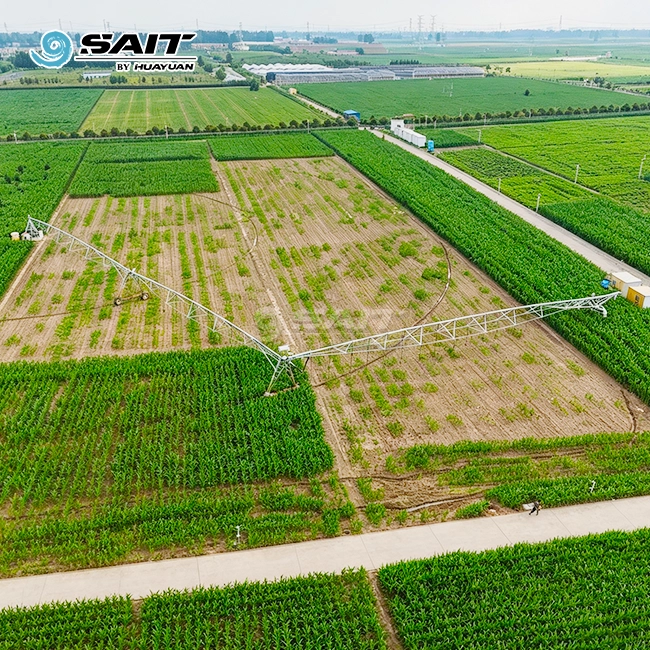
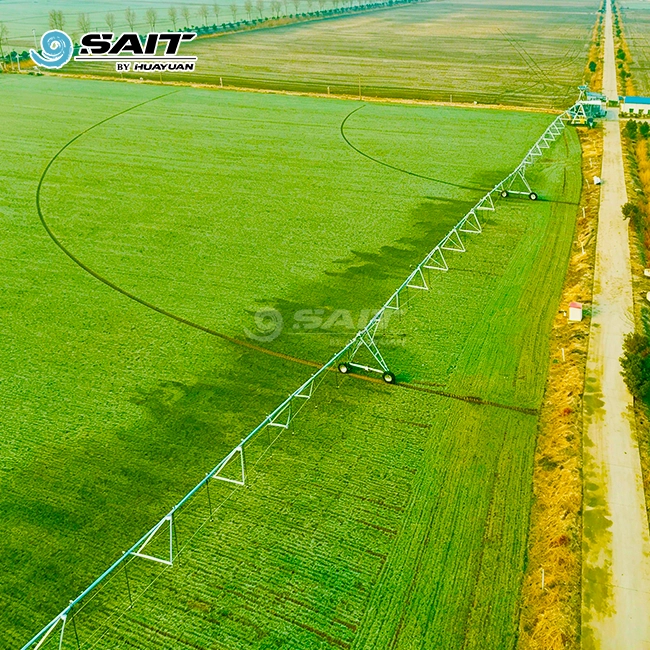
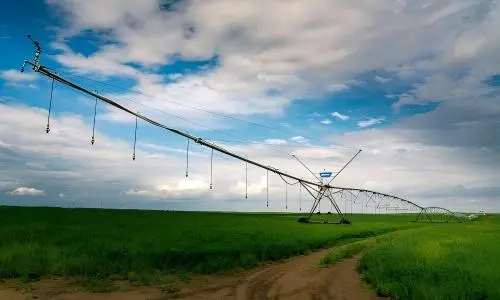
A high-profile center pivot is a mechanized irrigation system engineered with extended tower legs and reinforced truss assemblies to achieve vertical clearance heights ranging from 2.9 meters up to 4.5 meters. Unlike standard pivot configurations, this elevated design allows the lateral pipeline to pass over tall-growing crops such as sugarcane, mature corn, and orchard saplings without causing mechanical damage. The system rotates around a fixed central point, delivering water uniformly across circular fields covering 4 to 200 hectares per irrigation cycle, making it a reliable solution for large-scale commercial agriculture.
Understanding High-Profile Center Pivot Systems
From Standard Towers to Elevated Lateral Systems
People have used center pivot irrigation for business purposes since the 1950s, but as biomass-heavy cropping systems grew, so did the need for taller clearance configurations. A normal pivot keeps its tower height at about 2.1 meters, which is good for low-canopy crops like wheat or soybeans. When mature corn and sugarcane were pushed under the same machinery, damage to the stalks and tassels became measurable losses in yield.
This was directly handled by the switch to designs with higher clearances. New systems let you choose from span heights of 2.1m, 2.9m, 3.8m, and 4.5m. This lets procurement teams and engineering companies match the tower profile to the real canopy height instead of having to modify a unit that is too small. At HUAYUAN SAIT, the system can be set up in normal, low, high, and ultrahigh profile versions. All of these versions use the same core drivetrain and pipeline design to make sure that all the parts work together smoothly.
Key Components and Technical Dimensions
Tower, Drive Unit, and Pipeline Architecture
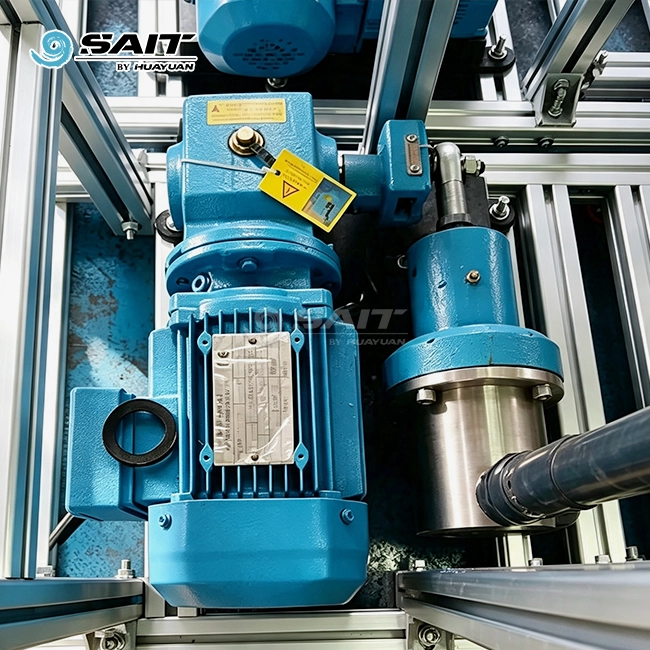
The Tall span irrigator, an elevated lateral irrigation system, is held together by the main pipeline, the gearmotor, the wheel assembly, and the tower frame. The HUAYUAN SAIT pivot has armored UL-listed wire wiring all over it, gearmotors rated at either 25.5:1 (1.5hp) or 40:1 (0.75hp), and wheel gearboxes with 50:1 or 52:1 ratios, based on the load needs in the field. You can get wheels in sizes 11.2-24, 14.8-24, and 16.9-24, and they come with or without tubes.
Pipeline diameter selection is based on field size. The main pipeline specifications of 5" (127mm), 6-5/8" (168mm), and 8-5/8" (219mm) can be used for projects ranging from small single-field installations to 800-meter radius operations that cover up to 200 hectares. The span lengths are between 37.5m and 66.5m, and the structure stays in place with 20mm or 22mm diameter truss rods even when the water is full.
SAIT Smart Control and Automation Module
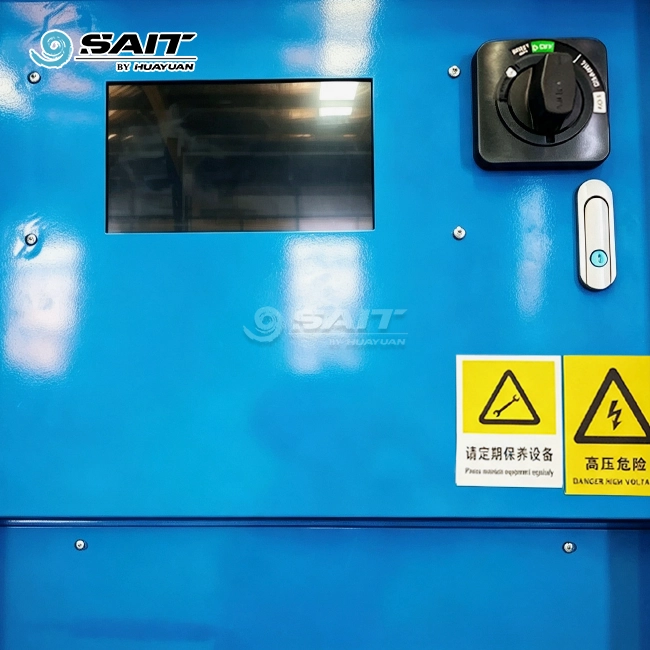
This platform is different from catalog-standard rivals because it has a SAIT control system. It combines BeiDou navigation, Internet of Things (IoT) sensors, and big data modeling to provide real-time Variable Rate Irrigation (VRI) that is adjusted to the way water soaks into the soil. The rate of missed irrigation stays below 5%, and irrigation uniformity is over 90%. These are important performance measures for handling crops on uneven terrain or large-radius areas.
The SAIT smart agriculture platform lets you do things like schedule work from afar, use applications based on zones, and run water and fertilizer systems together. This cuts down on the need for workers to be on-site and lets you handle with precision from any connected device.
Benefits and Performance Advantages
When it comes to three operational areas that procurement workers and farm operators always put first, high-profile center pivot systems offer measured value.
Here are the core performance advantages that distinguish this system from conventional alternatives:
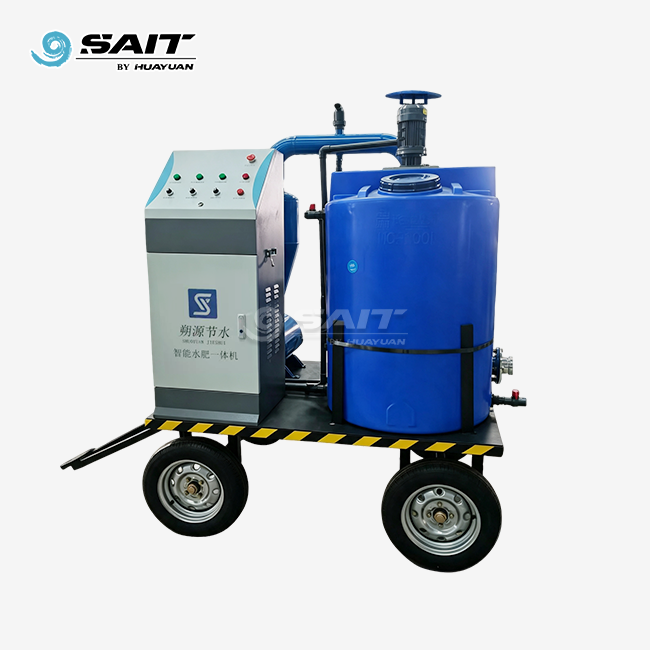
- Water savings exceeding 70% Compared to standard stream irrigation, it saves more than 70% of water. A single unit can water anywhere from 4 to 200 hectares per cycle, and the built-in fertigation function cuts down on nutrient waste while increasing the effectiveness of the application.
- Structural durability rated beyond 20 years Hot-dip galvanizing with a zinc coating thickness of at least 80µm gives structures a rating of more than 20 years of durability. This design works better than normal galvanized parts in difficult field conditions ranging from -20°C to 60°C and humid canopy microclimates. It meets the rust resistance needs of users in Africa, the Middle East, and Central Asia.
- Corner Arm System compatibility improves irrigation coverage by up to 15% in square or uneven field plans. This is a useful way to fix the coverage gap in the corners that happens with circular pivot systems on plots that aren't round.
All of these benefits make the total cost of ownership much lower than with drip systems or traveling guns. This is especially true for operations that cover more than 500 hectares, where the seasonal profitability is directly affected by how long the system lasts and how much automation is used.
Maintenance and Operational Best Practices
Scheduled Mechanical Inspections
Frames with normal heights don't have as much power as frames with extended tower legs. Every 200 hours of operation, the structural bolts at the tower base and the truss boot joints should be checked. Every season, you should check the alignment of your wheels to stop horizontal drift, which wears out the gears faster on the longer lever arm of a high-clearance tower.
Sprinkler and Sensor Calibration
Outlet spacing of 1.9m or 2.9m (customizable) needs to be checked on a regular basis because crop growth changes the canopy density below the span during different times of the year. When moving between crop types, drop-hose lengths and tip configurations need to be recalibrated to keep application uniformity above 90%. Every growth season, SAIT sensor units get new software that makes the modeling of soil moisture more accurate.
Tall span irrigator maintenance requires keeping track of the number of hours the gearmotor has been used, the pressure readings from the sprinklers, and the condition reports of the galvanizing, which helps keep the guarantee valid and allows for long-term planning of extra parts. HUAYUAN SAIT provides original parts at the factory cost price for the whole system's useful life. This eliminates a common risk that comes with buying aftermarket parts.


Procurement Guide: How to Choose a High-Profile Center Pivot System?
It takes more than measuring the crop canopy height to choose the right elevated clearance pivot. The configuration choice is based on the field radius, water source pressure, available power phase, topographic gradient, and crop rotation schedules for each season.
Buyers looking for units to use in the U.S. should make sure that the units meet ISO 9001 and ASABE standards, which HUAYUAN SAIT goods do. The system's ability to work with diesel drives and provide paperwork in multiple languages will be useful to international procurement teams in charge of African government projects or CIS-region state farm bids.
Some important things to think about when making a choice are the span layout (37.5m to 66.5m), the overhang length (up to 25m), the tower profile height, and whether the field design needs a corner arm connection. HUAYUAN SAIT will take pilot orders from a single unit for custom configurations. Within 30 to 45 days, rapid prototyping of specialized attachments will be finished. Private-label branding is possible on towers, control screens, and sprinkler packages for regional wholesalers with OEM and ODM services.
For standard configurations, delivery from the facility next to Xuzhou usually takes one week, and full export documentation is provided for international shipments.
Conclusion
A well-designed high-profile center pivot takes into account crop damage, terrain problems, water shortages, and the cost of labor all at the same time. This is why this configuration is becoming more popular on big industrial farms around the world. The HUAYUAN SAIT platform has over 130 patents, including 35 invention patents, and 20 years of manufacturing experience. It also has a fully integrated SAIT smart control design that can't be found in any other catalog provider. This product line has the right elevated pivot configuration for any job, whether it's taking care of 200 hectares of sugarcane or a state farm tender that covers more than 1,000 hectares.
FAQ
Q1: What is the maximum crop height a high-profile pivot can clear?
HUAYUAN SAIT's ultra-high-profile towers reach a 4.5-meter span height, providing effective clearance for mature sugarcane and 12-foot corn varieties without mechanical stalk contact.
Q2: Can a standard pivot be converted to a high-clearance configuration?
For retrofitting to work, the original spans, motors, and gears must be fully inspected for damage. Tower leg extensions change how weight is distributed and how loads are leveraged, so a new unit is often a better long-term investment.
Q3: Does increased tower height affect application uniformity?
No, as long as the drop-hose lengths and tip packages are adjusted to fit the new height. The HUAYUAN SAIT system automatically makes changes to keep uniformity above 90%.
Q4: What certifications do these systems carry?
The products meet the requirements of ISO 9001 and ASABE. Export paperwork for GOST, SASO, and other regional licensing needs is provided upon request.
Request a Custom Quotation from HUAYUAN SAIT
HUAYUAN SAIT is a well-known company that makes high-profile center pivots and works with big industrial farms, government projects, and regional wholesalers all over the world. Our engineering team is ready to set up a system that fits the size of your field, the type of food you grow, and your operating needs. You can email us at kevin@showyirrigation.com to get technical information, a pilot unit proposal, or a quote that is tailored to your project.
References
1. Food and Agriculture Organization of the United Nations. Irrigation Water Management: Irrigation Methods. FAO, 2023.
2. American Society of Agricultural and Biological Engineers. ASABE Standard S366.2: Landscape Irrigation Scheduling and Water Management. ASABE, 2021.
3. Camp, C.R., & Lamm, F.R. "Center Pivot Irrigation Systems: Advances in Design and Application." Transactions of the ASABE, 2020.
4. Evett, S.R., Colaizzi, P.D., & Howell, T.A. "Variable Rate Irrigation Technologies and Their Impact on Water Use Efficiency in Row Crop Production." Agricultural Water Management, 2022.
5. Lamm, F.R., Ayars, J.E., & Nakayama, F.S. Microirrigation for Crop Production: Design, Operation, and Management. Elsevier, 2007.
6. Pereira, L.S., Oweis, T., & Zairi, A. "Irrigation Management Under Water Scarcity." Agricultural Water Management, 2002.
Get a tailored irrigation solution for your project — our engineering team is ready to support you from design to installation.