How deep should a guidance trench be?
A guidance trench in a linear irrigation system is a shallow channel dug along the field's travel path, acting as a mechanical reference that keeps the lateral-moving machine tracking in a straight line. For most agricultural applications, the standard guidance trench depth falls between 20 cm and 40 cm (roughly 8 to 16 inches). The exact depth depends on soil type, equipment wheel size, and field terrain. Getting this right is not optional — a trench that is too shallow loses the machine's alignment; one that is too deep risks wheel drop-in and drive unit damage.
Understanding Guidance Trenches and Their Role in Linear Irrigation


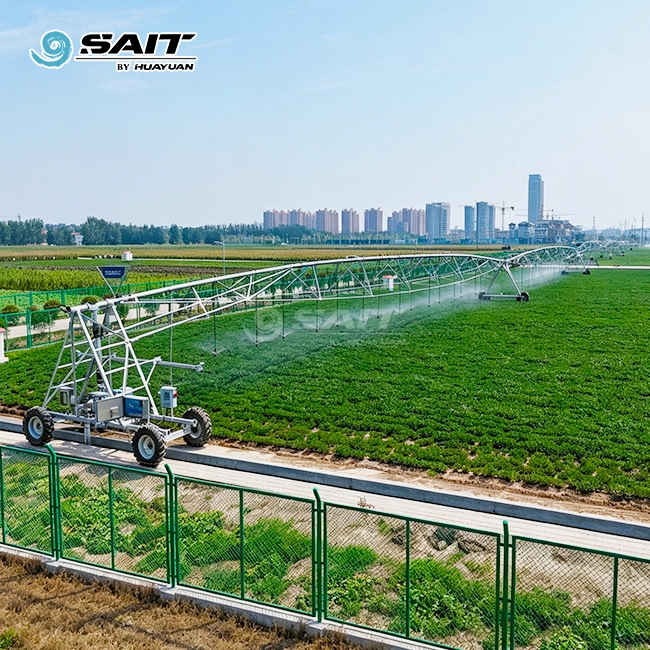
A guidance trench is a furrow that is carefully cut and goes the whole length of a linear move irrigation system. A center pivot machine turns around a fixed point. A linear move system, on the other hand, moves across rectangular fields perpendicular to its own structure. The trench marks the machine's physical path and keeps it from moving sideways while it's working.
What Makes a Guidance Trench Different from a Regular Furrow
There are different shapes and sizes of normal crop furrows that are made by tillage runs. It is planned to cut a guidance trench to a consistent depth and width, usually 20–35 cm deep and 15–25 cm wide. This way, a sensor arm or guide wheel can follow it along the whole field length, which on HUAYUAN SAIT's linear irrigation equipment can go up to 973 meters.
How the Trench Connects to the Machine's Steering System
For furrow-guided systems, there is a sensor arm that rides inside the trench. The arm notices when the machine moves to the left or right and tells the drive unit to fix it. The sensor stays in contact with the trench wall at all times because the trench depth stays the same. This makes adjustment reactions faster and more accurate.
Why Trench Depth Directly Affects Irrigation Uniformity
The sensor arm loses touch sometimes if the guide ditch depth changes across the field. This leads to overcorrections and small changes in the path of motion. In a 500-hectare sugar beet field, a path deviation of just 2° over 3,000 meters adds up to a big irrigation coverage gap, lowering the level of uniformity below what is acceptable.
Determining the Optimal Depth for a Guidance Trench: Key Factors to Consider
Not everyone has the "right" depth. It depends on a number of factors unique to the field that any user or purchase engineer should look at before installation.
Soil Type and Moisture Conditions
Soils that are sandy or loose need a slightly deeper ditch—about 35–40 cm—because the walls of the trench tend to fall apart when it rains. Soils that are high in clay keep the shape of walls better, so 20–25 cm is usually enough. Wet conditions make walls fall down faster, which is why, on heavier soils, it's best to drain irrigation water away from the trench path.
Equipment Wheel Size and Drive Unit Configuration
Linear move systems from HUAYUAN SAIT come with wheels that are 11.2-24 inches, 14.9-24 inches, or 16.9-24 inches in diameter, and can have either flat or tubed tires. Because bigger tires sit higher off the ground, the point where the sensor arm connects to the tire is also higher. In these situations, a 20–25 cm shorter trench still works well for the sensors without putting the wheels at risk of hitting the edge of the ditch.
Terrain Gradient and Field Slope
Most soil types can be dug to a depth of 25 to 30 cm in flat, level fields, which is where linear systems work best. If the cross-slope is more than 1%, the cut depth may need to be changed on the side that slopes down to account for the dirt naturally sinking. Doing a simple topographic study before digging can save a lot of money on rework costs during the first irrigation season.
Comparing Guidance Trench Depth Across Applications and Technologies
Depending on the linear system's guidance method, different depth requirements apply to the guidance trench. Linear irrigation machines made by HUAYUAN SAIT can work in three different modes: Furrow Guidance, Cable Guidance, and Satellite Guidance (BDS/GPS Dual-Mode).
Furrow Guidance vs. Cable Guidance Depth Requirements
The trench shape is the only thing that affects how the furrow is guided. The hole needs to be deep enough (usually 25–35 cm) so that the sensor arm can stay in touch. A live wire is buried 20–30 cm below the ground by cable guiding. In this case, the "trench" changes into a narrow slot for burying the cable instead of an open channel. The exact depth of the burial is very important for the signal strength at the detection coil.
GNSS Guidance and Reduced Trench Dependency
Satellite-guided systems that use both BDS and GPS get rid of the need for an open ditch completely. There is no need for a physical channel because the machine steers based on real-time position data. This is important for leased farms or projects to restore deserts where digging a fixed trench is not possible. HUAYUAN SAIT's models with GNSS get a missed-irrigation rate of less than 5% and uniformity above 90%, which is better than many trench-based systems on rough terrain.
Practical Benchmarks from Large-Scale Field Operations
Operators in CIS regions who are in charge of rectangular plots of 500 hectares or more say that a 30 cm furrow trench, which is re-cut at the start of each season after winter frost heave, gives consistent guide performance throughout the growing cycle. In efforts to clean up deserts in the Middle East, 25 cm of burial depth is best for cable guidance because sand quickly fills up open ditches during windstorms.
Installation and Maintenance Tips for Ensuring Correct Guidance Trench Depth
During assembly, cutting the hole the right way is only half the job. The hardest thing for most operators is keeping the depth the same over multiple irrigation seasons.
Step-by-Step Trench Preparation Before First Use
First, put survey sticks every 50 meters along the whole path of the route. A trenching attachment or subsoil plow can be used to cut a consistent depth in a single pass. Once the wood is cut, check the depth at each stake point and fill in any gaps that are more than 40 cm. Lightly press down on the trench floor to keep the sensor arm from sinking when the ground is wet.
Seasonal Maintenance and Depth Verification
Walk the length of the trench before each new irrigation season and look for wall collapse, roots growing into the soil, or sediment buildup. For this check, a depth gauge stick is all that's needed—no other tool is necessary. Cut back pieces that have been filled to less than 15 cm deep. Managing residue from the previous crop before inspecting a hole stops wrong depth readings from happening in areas with a lot of it.
When to Switch Away from Furrow Guidance
If you need to re-till your field a lot between crops, a guide ditch-based system will cause scheduling problems because the trench needs to be set up again after each pass. In these cases, switching to cable guidance or satellite guidance gets rid of the need to prepare the hole every year. The modular platform of HUAYUAN SAIT lets operators change the guidance mode without having to replace the whole drive unit.
Procurement and Decision-Making Guide: Choosing the Right Guidance System
Choosing the right guidance method affects how much it costs to build, how much work needs to be done every year, and how flexible the field will be in the long run. Before you buy, here are the main things you should think about:
- Furrow guidance carries the lowest upfront cost and suits stable rectangular fields with consistent tillage schedules. Trench preparation cost is typically absorbed into normal field operations. Best for sugar beet, potato, and vegetable row crop operators with predictable seasonal routines.
- Cable guidance requires a one-time cable burial investment but eliminates annual trench re-cutting. It performs well on sandy soils where open trenches are unstable. Suitable for permanent installations on government irrigation authority projects or cooperative-managed parcels.
- GNSS guidance (BDS/GPS dual-mode) carries the highest upfront cost but delivers the greatest field flexibility. No physical trench or cable is required. It is the preferred choice for contract farming companies on leased land and for desert reclamation projects where surface disturbance must be minimal.
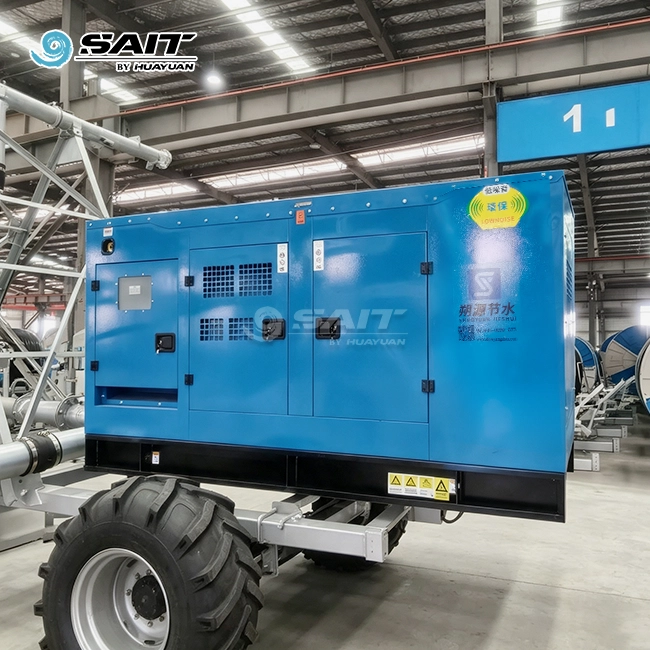
The HUAYUAN SAIT linear irrigation platform can work in all three modes. It can handle span lengths between 37.5 m and 54.9 m, a maximum machine length of 973 m, and a trip distance of up to 3,000 m per unit, which means it can cover up to 240 hectares per system. Along with towed cable or generator power, the platform can also connect to a canal for water or a drag hose for power. This way, choosing the guidance mode doesn't limit your water or power setup.
All systems come with on-site installation help, a full warranty for one year, low-cost maintenance for three years, and spare parts for life at the price the factory set them.
Conclusion
A realistic engineering choice, not a set standard, is the depth of the guidance trench. The usual range of 20–40 cm works for most farmland soils, but the best answer for your field will rely on how the soil behaves, how the wheels are set up, and which guidance method you choose. Furrow guidance needs regular maintenance of the trench; cable guidance trades maintenance of the trench for a one-time investment in a grave; GNSS guidance doesn't need a trench at all. If you match the guidance method to your field conditions and working ability from the start, you won't have to make expensive changes in the middle of the season. The modular linear watering systems made by HUAYUAN SAIT can be used in all three ways from the same base.
FAQ
Q1: What is the minimum safe guidance trench depth for a linear irrigation system?
In general, 15 cm is the minimum depth needed for operation. Below this, the sensor arm can't reliably touch the wall when it turns or when the ground isn't level. For stable soils, 20 cm is the bare minimum that can be used, and 25–30 cm is suggested as a starting point for most farming areas.
Q2: How often does a guidance trench need to be re-cut?
In fields that are tilled once a year, the trench usually needs to be cut again before the irrigation starts. In no-till or minimum-till fields, a trench that is well taken care of can last for two to three seasons before the wall wears down and needs to be cut again.
Q3: Can a guidance trench be used in sandy desert soils?
In sandy soils, open furrow trenches fall apart quickly, especially when there is wind. You can use GNSS satellite guidance or cable guidance with a line buried 20–25 cm deep in the ground for desert uses.
Q4: Does switching from furrow to GNSS guidance require a new machine?
No, HUAYUAN SAIT's linear irrigation platform has a modular drive unit design that lets you change the guidance mode without having to replace the whole system. If you want to switch from furrow guidance to satellite guidance, you only need to change the hardware and the way it is set up.
Ready to Configure Your Linear Irrigation System? Contact HUAYUAN SAIT Today
HUAYUAN SAIT has been making guidance trench linear irrigation systems for 20 years and has more than 130 patents, 15 of which are international. From one platform, our systems can handle furrow, cable, and satellite guidance, and they can be delivered in as little as one week from our facility near Xuzhou. Because we are a straight guidance trench provider, we can do OEM and ODM work, help with installation, and give you spare parts for as long as the machine lasts. Email Kevin@showyirrigation.com with the plan of your field and the details of your project.
References
1. Food and Agriculture Organization of the United Nations. Irrigation and Drainage Paper No. 45: Guidelines for the Design and Evaluation of Irrigation and Drainage Projects. FAO, 1989.
2. American Society of Agricultural and Biological Engineers. ASABE Standards: Design and Installation of Microirrigation Systems. ASABE, 2017.
3. United States Department of Agriculture, Natural Resources Conservation Service. National Engineering Handbook, Part 652: Irrigation Guide. USDA-NRCS, 2012.
4. Keller, J., & Bliesner, R. D. Sprinkle and Trickle Irrigation. Van Nostrand Reinhold, 1990.
5. Irrigation Association. Landscape Irrigation Scheduling and Water Management: Practice Guidelines. Irrigation Association, 2014.
6. Cuenca, R. H. Irrigation System Design: An Engineering Approach. Prentice Hall, 1989.
Get a tailored irrigation solution for your project — our engineering team is ready to support you from design to installation.