How to improve boom spray uniformity?
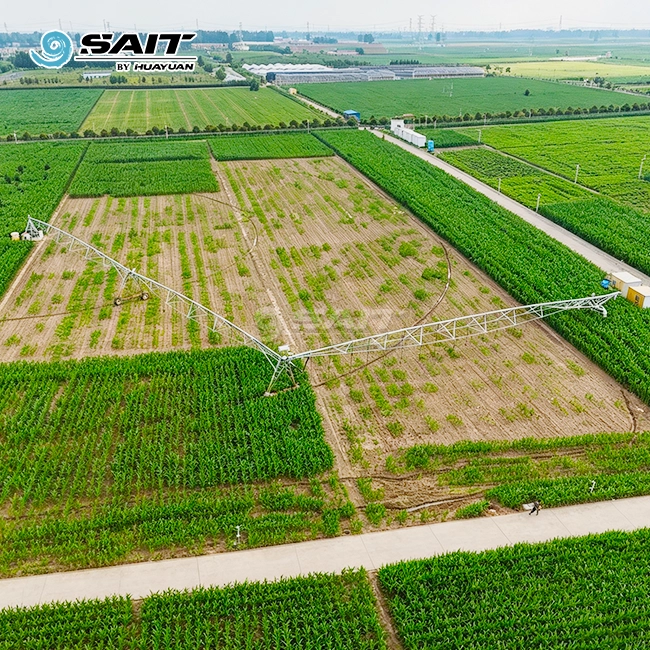
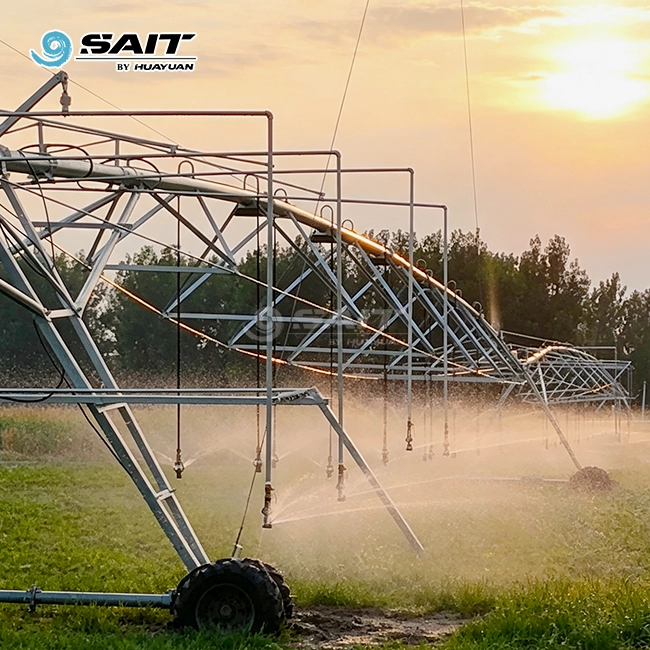
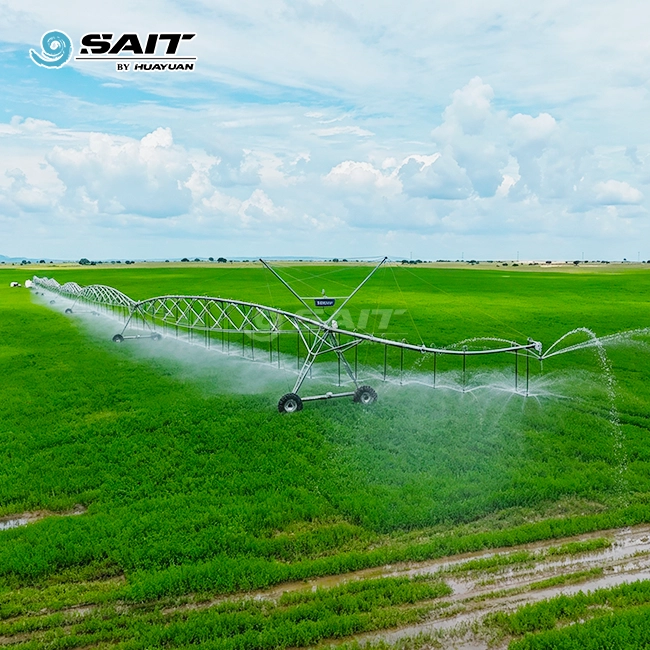
Improving boom spray uniformity starts with controlling pressure, nozzle condition, boom height, and travel speed simultaneously. A well-tuned boom spray irrigation system — one that delivers water through multiple low-pressure nozzles mounted on a horizontal boom carried by a hose-reel traveler — can achieve a Distribution Uniformity (DU) above 90%. According to research from the University of California Cooperative Extension, poor uniformity can waste 20–30% of applied water and reduce crop yield by up to 15%. Getting these four variables right is the single most effective way to close that gap.
Understanding Boom Spray Uniformity Challenges
Most of the time, one thing is not enough to explain uneven water application. It's usually caused by a number of problems that get worse over the course of a season.
Pressure Fluctuations Across the Boom
Nozzle output changes at different rates across the whole boom when the input pressure goes up or down, even by a small amount. At the outer nozzles, a 10% drop in pressure can cut the spray volume by up to 20%. This leaves dry strips that can't be seen until crop stress shows up. The easiest way to fix things is to put a pressure control on each needle body.
Nozzle Wear and Clogging
Wear-out nozzles deviate from their stated flow rate more quickly than most users think. Tests in the business world show that a nozzle that is worn down to 110% of its original orifice size increases flow by about 21%, which changes the overlap pattern. The pattern stays the same by checking the nozzles every 500 hours of use and changing sets as a whole, not one at a time.
Boom Height Inconsistency and Wind Interference
For flat-fan and deflector nozzles to work right in boom irrigation, they need to be a certain height above the canopy. Water pools in narrow bands when the boom is 6 inches too low. Droplets don't meet when the wind speed is above 15 mph. Systems with the boom close to the top, like a hose-reel traveler, are much less likely to be affected by wind drift than systems with the boom higher up.
Key Components Influencing Spray Uniformity


The quality of individual components determines whether calibration adjustments hold over time or drift back toward inconsistency within weeks.
Boom Structure and Self-Leveling Design
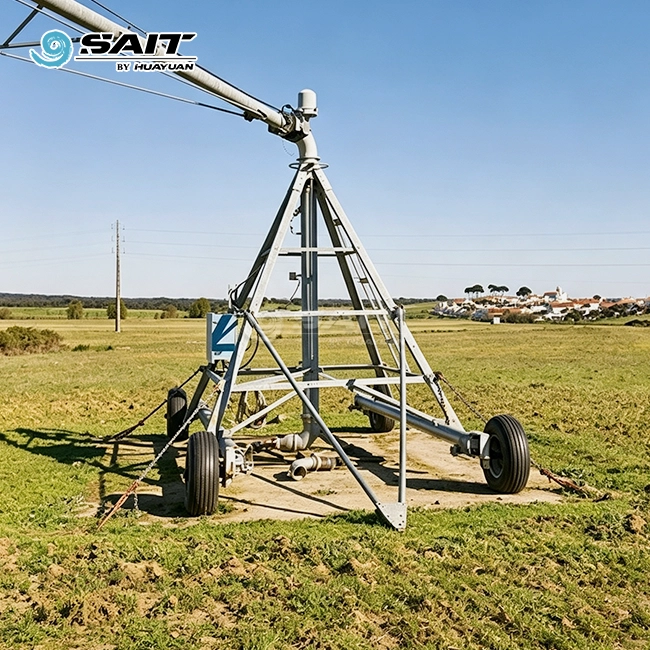
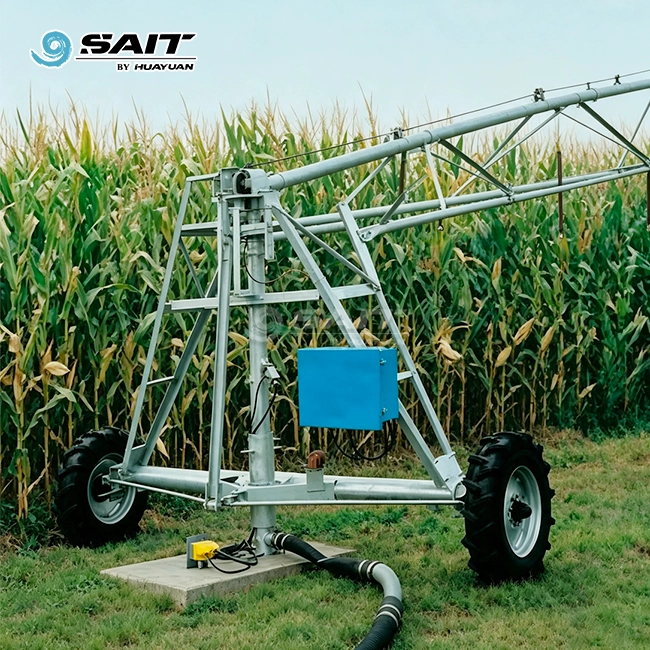
A rigid, properly balanced boom holds nozzle height constant across uneven ground. Modern booms use pendulum-style or hydraulic self-leveling to maintain a parallel orientation to the soil surface. This matters most on fields with grade changes above 2%, where a fixed boom arm can create height variation of 12 inches or more from one end to the other.
Nozzle Selection and Spacing
Nozzle type, orifice size, and spacing must match the target crop, soil infiltration rate, and operating pressure. For vegetable crops and specialty applications, flat-fan nozzles at 20-inch spacing typically deliver the most consistent overlap. Choosing nozzles rated for the actual operating pressure range — rather than the pump's maximum output — prevents chronic overpressure drift.
Pump Performance and Control Valves
A pump that maintains steady flow under varying load conditions anchors the entire system's uniformity. Pressure-compensating control valves downstream of the pump absorb minor fluctuations before they reach the boom. Together, these components protect the nozzle pattern from the supply-side variability that accounts for a large share of field uniformity problems.
Effective Techniques to Improve Boom Spray Uniformity
When all the right parts are in place, these operational changes make the system work at its best.
Step-by-Step Nozzle Calibration
Calibration is a way to measure something directly, not just guess. For 60 seconds, collect the output of the nozzle in graduated containers at the target operating pressure. Check the output of each nozzle against the maximum flow given by the manufacturer. If a nozzle's output is off by more than 10%, it should be changed before the next watering pass. If the overlap pattern has a Uniformity Coefficient (UC) above 88%, a catch-can test across the full width of the boom will show that it does.
Pressure Stabilization and Boom Height Setting
Set the inlet pressure of the boom spray irrigation system to be within the range recommended for your model. We need to keep the pressure between 0.5 and 1.0 MPa at the inlet and between 0.25 and 0.5 MPa at the nozzle for the JP-75 series. The JP-90/400 has an input range of 0.3 to 1.2 MPa, which lets it be adjusted easily for different field lengths. At the start of each season and after any movement that might have moved the frame, the boom height should be checked.
Travel Speed Synchronization
Application depth is directly controlled by travel speed. When traveling faster, less water is used per unit area, and when traveling slower, more water is used. The JP-75 and JP-90 series can move at speeds ranging from 8 to 80 m/h, and operators have full control over the application rate, which is usually above 7 to 8 mm/h based on the type. When you match the travel speed to the rate at which water soaks into the soil, you stop runoff and surface ponding, which are both signs of uneven application.
Comparing Boom Spray with Other Irrigation Methods for Uniformity
Procurement teams can make the best choice for their operation when they know how different systems work.
Drip irrigation is very accurate at reaching the root zone, but it needs permanent infrastructure that is buried, which means that medium-sized farms or agricultural service contractors can't move from one field to another. Overhead sprinklers are flexible on uneven ground, but they use a lot of energy and are more likely to blow away in winds faster than 15 mph. A hose-reel traveler with a multi-nozzle boom spray carriage is in the middle of these two choices. It evenly spreads precise levels of spray over a large area without having to be permanently installed.
Before you buy, here are the main changes you should think about:
- Boom spray on hose-reel traveler: Irrigation width of 47–78 meters per pass; no permanent infrastructure; relocatable within one day; low operating pressure reduces energy cost; DU above 90% achievable with proper calibration.
- Drip irrigation: Highest root-zone precision; high installation cost; suited for permanent perennial crops; not practical for multi-field contractors.
- Overhead sprinkler systems: Good terrain flexibility; higher energy consumption; wind-drift sensitivity above 15 mph limits operating windows.
Automation makes boom spray systems even better in more ways. HUAYUAN SAIT's JP-series hose-reel riders have turbine-driven retraction that lets you change the application depth by changing the return speed. You don't need to connect to the power grid to use these. In one boom irrigation cycle, one unit watered more than 1.33 hectares, which is more than 50% more water than standard rain guns.
Case Studies & Real-World Applications
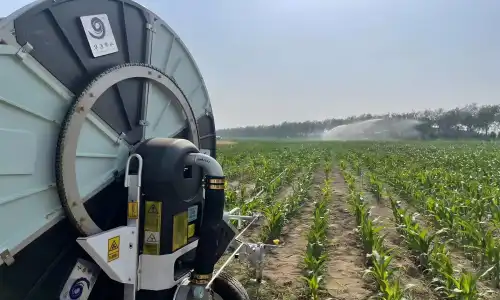
When farms use calibrated boom systems all the time, they consistently report gains that can be measured in terms of water efficiency and stable yields.
A vegetable farmer who works on 120 hectares said that moving from a single large-diameter rain gun to a multi-nozzle boom carriage on a JP-90/400 cut the time it took to finish each irrigation cycle by one-third and the amount of water used by 48%. The main change was getting rid of a single high-pressure impact nozzle that was very sensitive to wind and replacing it with 14–28 mm nozzles spread out across the whole boom that work at 0.25–0.5 MPa. The lower pressure also made the earth less compact at the top, which made it easier for water to soak into areas of compacted clay.
The form that can be moved around is useful for agricultural service workers who work on more than one farm. The JP series doesn't need any permanent infrastructure, so one machine can serve three or four farms in a week. The PE pipe in HUAYUAN SAIT's JP-series is made from brand-new material, is thicker than standard market pipes, and has a service life of more than 15 years. This is because PE pipe failure is the most common warranty claim in this category of equipment.
Conclusion
Managing pressure, nozzle condition, boom height, and travel speed as a connected system rather than separate variables is what makes a boom spray irrigation system uniform. By choosing equipment with the right technical specs, like the right range of nozzle diameters, a stable turbine drive, and long-lasting PE pipe, the most common failure points can be avoided before they happen. HUAYUAN SAIT's JP-75 and JP-90 models are based on these ideas. The average machine service life is over 10 years, and PE pipe lasts over 15 years. With every unit, you get expert support and help with installation on-site.
FAQ
Q1: How does wind affect a boom spray system compared to a rain gun?
Boom-mounted nozzles are much less likely to be blown away by wind than a single rain gun that is 3–5 meters above the ground. This is because they work close to the cover at low pressure. The design of the distributed nozzles keeps the pattern intact in winds of up to 15–20 mph, so the wetting pattern stays the same across the whole width of the boom.
Q2: Can a boom spray system be used for fertigation?
Yes. The JP series of materials can handle liquid fertilizer, so nutrients can be delivered directly through the irrigation pass without having to be applied separately.
Q3: What maintenance do nozzles require?
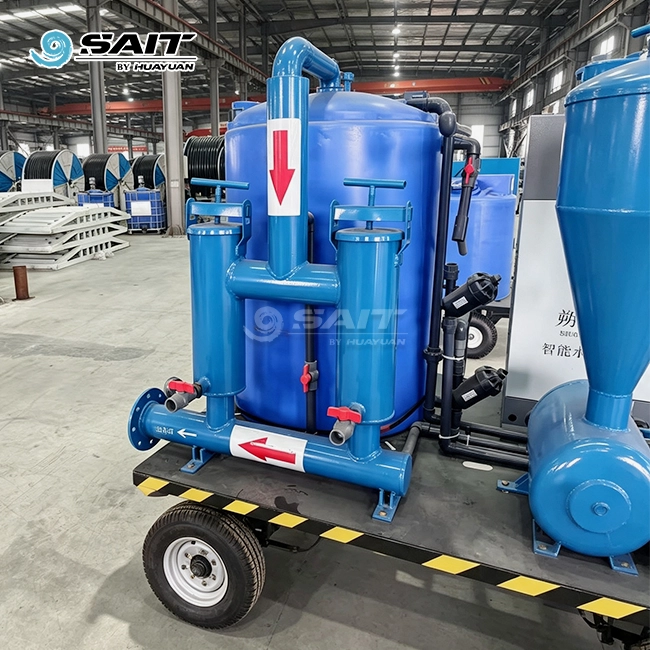
Every 500 hours of use, check the nozzles for wear and clogging. Use the tools that the manufacturer suggests to clean. High-quality systems have inline filtration to lower the number of times they get clogged between service visits.
Q4: How does the system handle uneven terrain?
Modern boom carriages have self-leveling features that keep the boom level with the ground. This keeps the nozzle height the same even when the grade changes by up to 5%.
Get Accurate Pricing from a Trusted Boom Spray Irrigation System Manufacturer
HUAYUAN SAIT has been making things for 20 years and has more than 130 patents, including 35 invention patents. Our JP-series hose-reel riders make watering more even than 90% of the time and save more than 50% of the water that would have been used. We ship within a week and can handle both OEM and ODM setups. You can email our team at kevin@showyirrigation.com to get prices and more information about our boom spray irrigation system supply services.
References
1. Burt, C. M., Clemmens, A. J., Strelkoff, T. S., Solomon, K. H., Bliesner, R. D., Hardy, L. A., Howell, T. A., & Eisenhauer, D. E. (1997). Irrigation Performance Measures: Efficiency and Uniformity. Journal of Irrigation and Drainage Engineering, ASCE.
2. Zoldoske, D. F., Solomon, K. H., & Norum, E. M. (1994). Uniformity Measurements for Turfgrass — What's Best? Center for Irrigation Technology, California State University, Fresno.
3. Hanson, B., Schwankl, L., & Fulton, A. (2000). Scheduling Irrigations: When and How Much Water to Apply. University of California Division of Agriculture and Natural Resources, Publication 3396.
4. Evans, R. G., & King, B. A. (2012). Site-Specific Sprinkler Irrigation in a Water-Limited Future. Transactions of the ASABE, 55(2), 493–504.
5. American Society of Agricultural and Biological Engineers (ASABE). (2019). ASABE Standard S436.1: Test Procedure for Determining the Uniformity of Water Distribution of Center Pivot and Lateral Move Irrigation Machines Equipped with Spray or Sprinkler Nozzles. ASABE.
6. Playán, E., & Mateos, L. (2006). Modernization and Optimization of Irrigation Systems to Increase Water Productivity. Agricultural Water Management, 80(1–3), 100–116.
Get a tailored irrigation solution for your project — our engineering team is ready to support you from design to installation.