Top 3 Reasons to Use a Linear Irrigation Machine
When managing large-scale agricultural operations, choosing the right irrigation technology directly impacts yield, profitability, and sustainability. A linear irrigation machine stands out as a precision solution for rectangular and irregularly shaped fields, delivering uniform water application while maximizing every square meter of farmland. Unlike center pivot systems that leave unirrigated corners, lateral move equipment travels in straight lines, achieving field coverage rates exceeding 98%. This comprehensive guide explores three compelling reasons why procurement managers, agricultural cooperatives, and government authorities are investing in linear systems for high-value crops, desert reclamation projects, and water-efficient farming zones.
Reason 1: Maximum Field Coverage and Land Utilization
Eliminating Corner Wastage
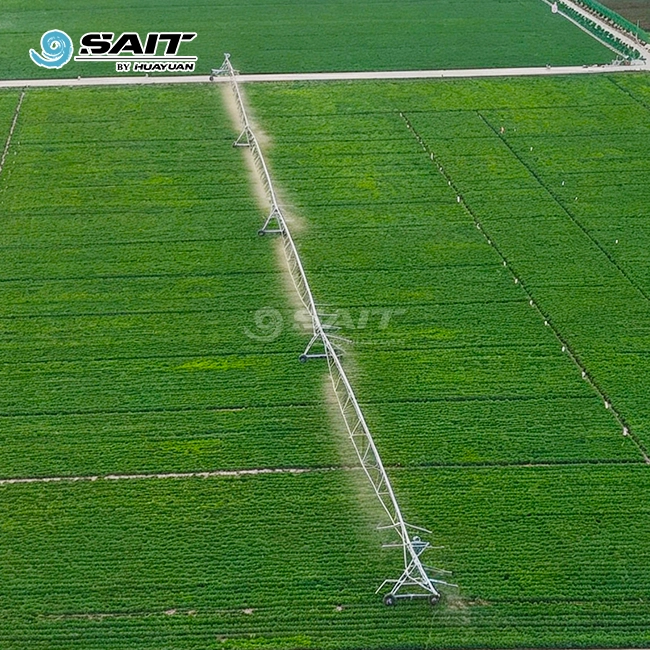
When you use a traditional center pivot watering system, you get circular patterns that don't cover 15-20% of rectangular areas. This wastes almost 40 hectares of land on a 240-hectare plot, which is not acceptable for high-value crops like potatoes, sugar beets, or vegetable row crops. Linear irrigation machines move in a straight line along the structure of the equipment, making sure that the whole length of the field is evenly covered. Modern machines can reach lengths of up to 973 meters and water areas carefully from one point to the other.
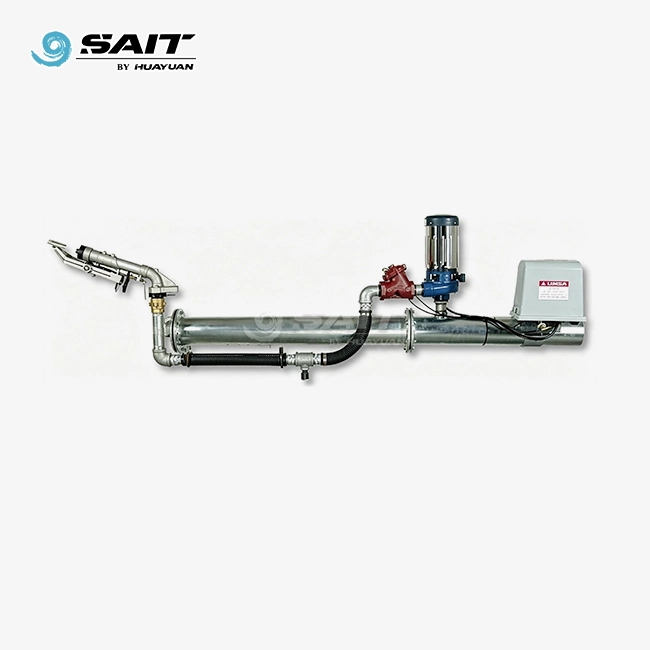
Corner arm technology from HUAYUAN SAIT improves coverage even more for square or odd-shaped boxes. This special overflow system goes from 2.7 meters to 25 meters, reaching areas that couldn't be reached before and increasing the area that can be irrigated by 15%. Agricultural groups that take care of several nearby rectangular parcels benefit the most from this design because it saves them money on capital costs while still covering all property lines.
Adapting to Diverse Terrain
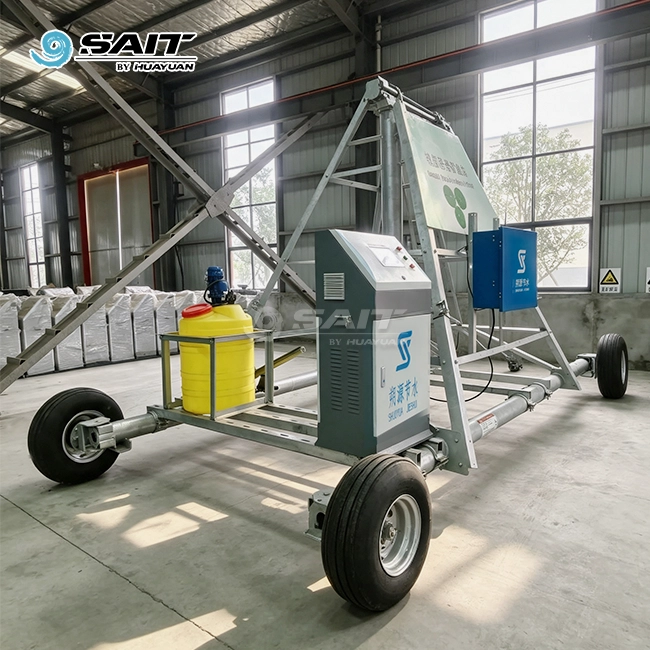
Fields with length-to-width ratios higher than 2:1 make it hard for circular systems to work. Linear irrigation machines work great in these conditions and come in span lengths of 37.5m, 43.3m, 49.1m, and 54.9m to fit different field sizes. The tools can work over grown crops like sugarcane or nursery stock without damaging them because they can handle both standard-height and high-clearance spans.
Conditions of the soil are very different in different parts of the world. HUAYUAN SAIT solves this problem by offering wheels in a range of sizes and configurations, including 11.2-24, 14.9-24, and 16.9-24 tires with or without tubes. When the ground is soft, like in delta areas, four-wheel lateral systems work well, while two-wheel designs keep the ground from getting too compact in clay-heavy fields. Because the joint spans are flexible, they can be used on slopes of up to 15%. This means that the technology can be used in terraced vines or trees on hillsides, where other pivot systems fail.
Reason 2: Advanced Precision and Resource Efficiency
Water Savings Through Intelligent Control
In the Middle East, North Africa, and Australia, buying choices are based on how little water is available. Linear irrigation machines use low-pressure nozzle packages that cut down on wind drift and evaporation to make irrigation more even than 90% of the time. Pipe sizes of 168 mm and 219 mm keep friction loss to a minimum, so the pressure stays the same from the first pass to the last, even when traveling up to 3,000 meters.
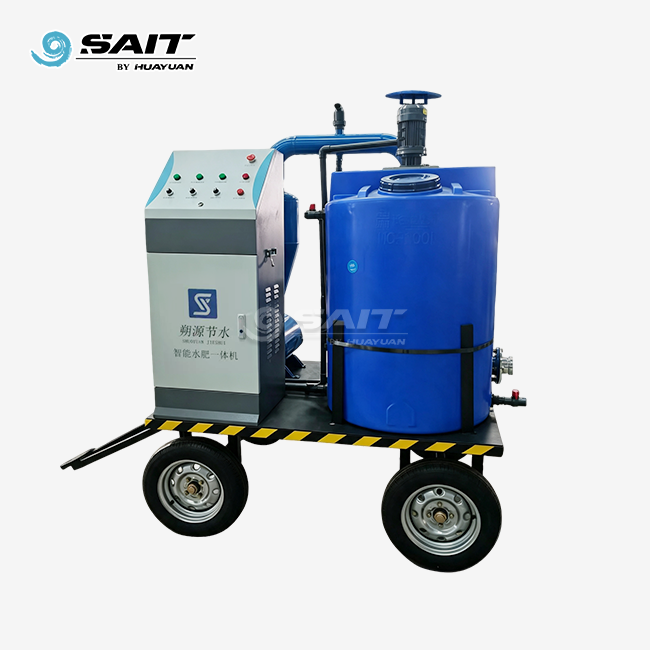
By adding fertigation, watering can be turned into a method for delivering nutrients. When water and fertilizer are applied at the right time, waste is cut by 30–40% compared to widespread spreading. This lowers input costs directly and keeps groundwater from becoming contaminated. These environmental benefits are a top priority for government-funded projects in Tunisia and Morocco, which see water-efficient technology as essential to meeting conservation requirements.
Guidance Systems for Operational Accuracy
Early methods relied on physical furrows or wires that were buried to keep them in line. Modern machines use both BeiDou and GPS satellite guidance, which lets them track with accuracy of less than an inch without any infrastructure on the ground. HUAYUAN SAIT's special algorithms solve the problem of how to calibrate guidance systems, which lowers the number of missed irrigation runs to less than 5%. This is a very important success indicator for contract farming operations with strict yield goals that are written into lease agreements.
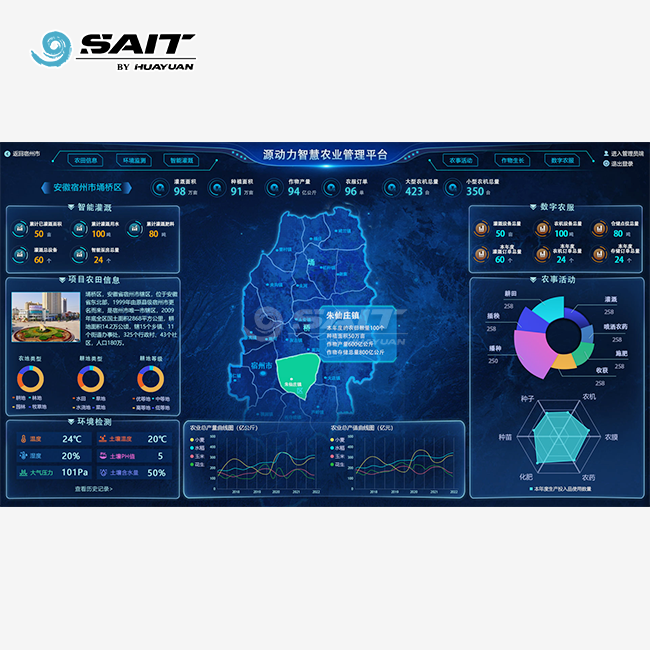
For smaller jobs or places where satellite service isn't consistent, cable guidance is still a good value. The flexible design lets the buying team choose between trench, cable, and satellite modes based on the cost and difficulty of the operation. This adaptability is very important for companies that sell agricultural equipment because they have a wide range of customers, from small family farms that just need basic automation to large corporate farms that need real-time remote monitoring through IoT platforms.
Energy Optimization
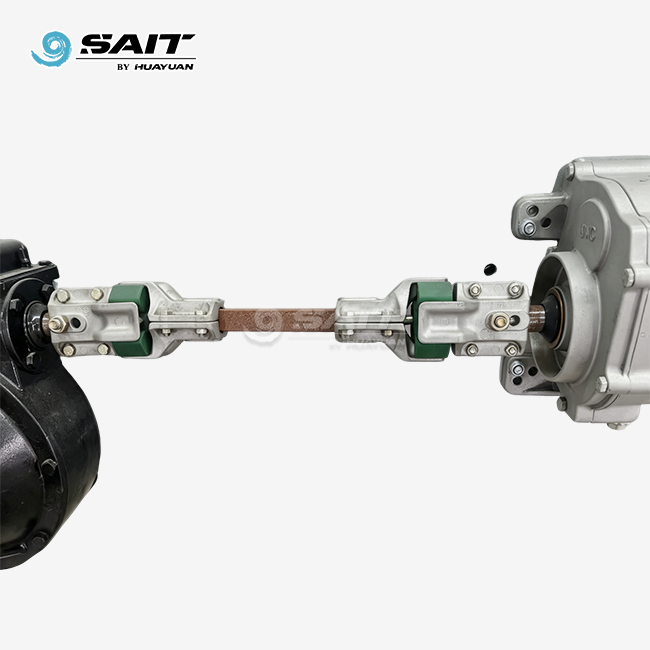
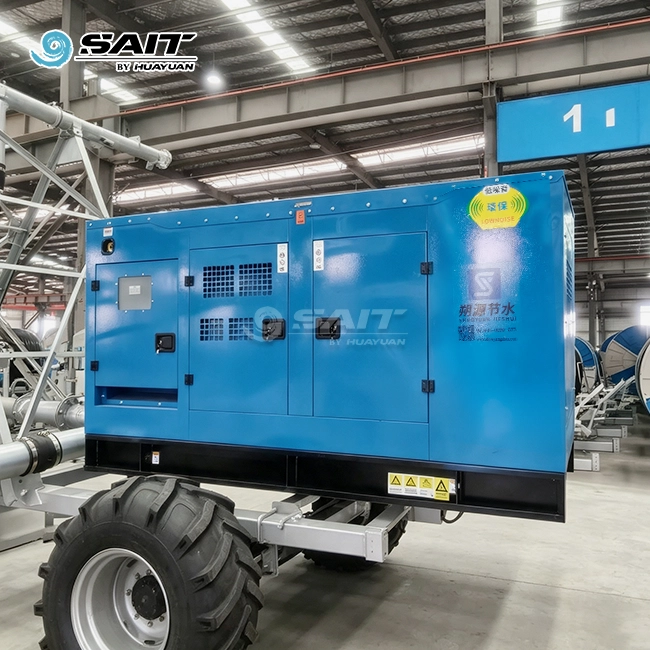
Operating costs are directly affected by how much power is used. Linear irrigation machines can use a variety of power sources, such as a towed electrical cable for fields that are connected to the power grid, diesel generators for wheat farms in Kazakhstan that are far away, and hybrid configurations for places where power goes out sometimes. HUAYUAN SAIT created a 4-speed gearbox for a water turbine that improves energy transfer and allows for longer spray distances at the same recovery speeds as other drive trains. Wear-resistant gears make service intervals longer, which cuts down on repair breaks that can mess up important irrigation windows.
Reason 3: Customization and Scalability for B2B Procurement
Tailored Engineering for Project Requirements
Government contractors and people who are planning agricultural projects need solutions that are tailored to the site. The engineering team at HUAYUAN SAIT looks at topographic survey data and suggests drive unit designs based on the crop height, field gradient, and earth carrying capacity. Single-beam structures work well for smaller tasks like watering lettuce or carrots, while double-beam designs can handle the weight of thick corn canopies in Brazil's Cerrado area.
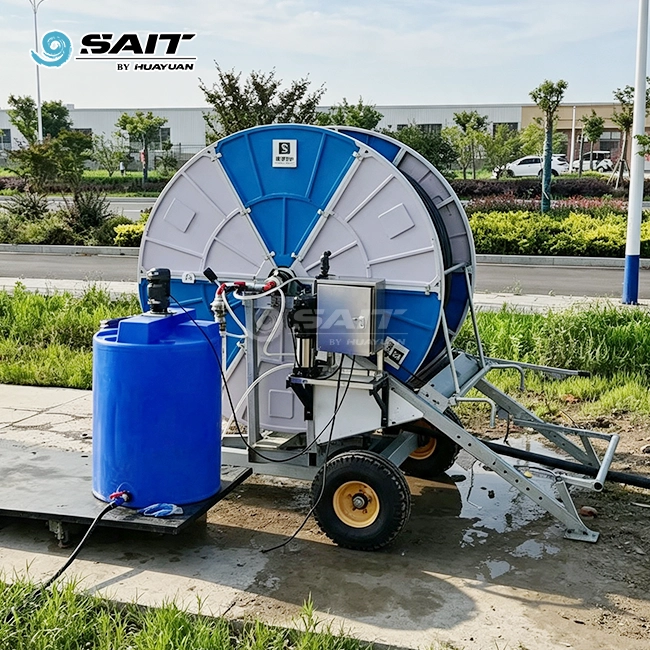
Integration of the water supply is an example of this level of customization. For government irrigation agencies that already have the right infrastructure, a canal water source works well. On the other hand, drag hose systems are more flexible and can be used on leased land where permanent installations aren't possible. Hose reel configurations make it easy to move quickly between plots that are next to each other, which helps contract farming companies that are working on multiple projects at the same time get the most out of their tools.
The option to order one to two demonstration units before committing to buying a whole fleet lowers the risk of acquisition. Rapid prototyping lets you get unique drive combinations in 30 to 45 days, so you can test them in the field under real working conditions. This step-by-step method boosts trust among distributors bringing lateral move technology to markets that are mostly controlled by center pivot companies.
OEM and Private-Label Opportunities
For ODM partnerships, equipment brands that are adding more products use HUAYUAN SAIT's production capacity of 1,800 units per year. Full branding includes drive units, control panels, and guidance interfaces, so the brand stays the same across the whole irrigation portfolio. Distributors can offer private online tracking without having to hire software engineering teams when custom software development includes client-specific data platforms.
With 20 years of experience making things, the company guarantees consistent quality, which is important for a brand's image. Hot-dip galvanizing with a thickness of more than 80 microns protects against rust in harsh marine and desert settings, where cheaper finishes break down in five seasons. Self-produced virgin PE pipes get rid of the risks that come with recycled materials that cause them to fail early, which is a common complaint among farming groups that manage shared assets.
After-Sales Support and Parts Availability
Skilled repair is needed for complex steering systems and drive trains. HUAYUAN SAIT offers on-site installation supervision and operator training in languages that buyers prefer. This removes the technical barrier that had previously stopped people from using linear irrigation machines. With remote diagnostics through connected control systems, problems can be fixed without sending technicians across foreign lines. This cuts response times from weeks to hours.
The full service deal comes with a free warranty for one year, low-cost upkeep with part replacement for three years, and the ability to get spare parts at cost for life. This promise answers the main worry of Australian purchasing managers, who want parts support for 15 years to explain capital investments. Standardized parts across span lengths make it easier for wholesalers to keep track of their new gearboxes, sensors, and sprinkler systems.
Additional Considerations for Procurement
Supplier Evaluation Criteria
When choosing industrial partners, you need to look at their production capacity, ability to meet certification requirements, and financial security. Together with China Agricultural University, HUAYUAN SAIT runs local engineering research centers and has more than 130 patents, including 35 invention patents and 15 foreign registrations. This portfolio of intellectual property shows the ability to come up with new ideas, which is important for long-term product development partnerships.
The position of goods affects how well they are shipped. The manufacturing hub in Xuzhou connects transportation networks at the hub level to shipping lanes on the water. Shorter export wait times and lower freight costs are important things to consider when comparing quotes from providers in different areas. One-week delivery times help project managers plan spring installation windows in Russia and Kazakhstan, where early planting brings in money during that season.
Financial Models and Total Cost of Ownership
Teams that buy things try to find a mix between up-front cash and lifecycle costs. For circular fields, linear irrigation machines cost more per hectare to install than center pivots. However, for rectangular parcels, the 98% covering rate and lack of corner losses make the return on investment better. Before buying something, you should do a thorough field shape efficiency study that compares horizontal coverage to pivot coverage.
Contract farms that only need to keep the land for a short time can benefit from leasing options. Equipment can be moved to follow crop rotations or when the lease term ends thanks to designs that are mobile and have swing-around wheels. Because of this, irrigation infrastructure goes from being a fixed cost to a mobile asset, which completely changes the way operators who don't own the land permanently figure out their costs.
Conclusion
Linear irrigation machines solve some of the most important problems in modern farming, like making the best use of land, protecting water resources, and automating tasks with great accuracy. When purchasing managers are thinking about big investments in irrigation, methods that cover 98% of the field and allow for fertigation are a big plus. When it comes to rectangular fields, group farming structures, and government water efficiency programs, lateral move equipment is perfect because it can be set up in a variety of ways and comes with full after-sales support. To make implementation work, you need to work with makers that have proven engineering skills, solid supply lines, and parts that will be available for a long time.
FAQ
Q1: How does water supply method affect system complexity?
For the canal to give water, it needs to work with current irrigation districts and use traveling pump systems that make the machinery more complicated. Drag hose systems are easy to use, but the largest field area is limited by the length of the line and the amount of friction loss. HUAYUAN SAIT's modular approach lets clients choose the water transportation method that works best with their facilities. This balances the difficulty of installation with the flexibility of long-term use.
Q2: What guidance system is most reliable for large cooperatives?
Using satellite guiding with BeiDou/GPS dual-mode gets rid of the need to maintain infrastructure for systems with underground cables. Even though the initial costs are 20–35% higher, the long-term costs are much lower because field equipment and wildlife can't damage the cables. Cooperatives that are in charge of many machines spread out over hundreds of areas can really benefit from the remote tracking features that come with satellite systems.
Q3: Can linear systems be relocated between non-adjacent fields?
Swing-around designs let tractors pull to nearby plots, but moving long distances needs professional disassembly and transport. When compared to permanently anchored pivot systems, the modular span design makes this process easier. This means that linear equipment can be used for contract farming operations that move between seasonal leased parcels.
Partner with HUAYUAN SAIT for Your Linear Irrigation Needs
HUAYUAN SAIT specializes in making horizontal move systems that are specifically designed for B2B farming businesses around the world. For equipment makers and project developers, our engineering team plans field layouts, makes unique span configurations, and does OEM/ODM work. By making everything in-house, from structure parts to fully assembled machines, we can keep an eye on quality the whole time and keep prices low by supplying directly from the plant. Email our team at kevin@showyirrigation.com to talk about the needs of your project, get technical specs, or set up a demo for your buying committee. As a seller of linear irrigation machines, we have the technical know-how and production capacity to help you reach your goals for modernizing agriculture, whether you need to find a single trial unit or negotiate orders for a whole fleet.
References
1. Agricultural Irrigation Equipment: Design and Performance Standards, American Society of Agricultural Engineers, 2021
2. Field Efficiency Analysis of Linear Move versus Center Pivot Systems in Rectangular Agricultural Parcels, Journal of Irrigation and Drainage Engineering, 2020
3. Water Use Efficiency in Precision Irrigation: A Comparative Study of Delivery Systems, International Commission on Irrigation and Drainage, 2019
4. Economic Feasibility of Relocatable Irrigation Infrastructure for Contract Farming Operations, Agricultural Economics Research Review, 2022
5. Guidance System Accuracy and Its Impact on Irrigation Uniformity in Large-Scale Commercial Agriculture, Precision Agriculture Journal, 2021
6. Corrosion Protection Standards for Agricultural Equipment in Arid and Coastal Environments, Materials Performance and Durability in Farming Applications, 2020
Get a tailored irrigation solution for your project — our engineering team is ready to support you from design to installation.